USD INR ₹ 94.96
GBP INR ₹ 125.61
CAD INR ₹ 65.63
Articles

Best Money Transfer Options for Digital Nomads: A Complete Guide by CompareRemit

Updated on October 28, 2024 04:53 pm
Digital Nomads 2024

Living as a digital nomad offers the freedom to work from anywhere in the world, but it also brings unique financial challenges. Digital nomads frequently need to manage their finances across borders, meaning they rely heavily on efficient, cost-effective money transfer services. With so many options available, it’s essential to choose a provider that offers the best combination of exchange rates, low fees, and worldwide accessibility.

Using a reliable service not only allows digital nomads to send money securely but also provides the convenience of transferring funds from multiple origin countries to various destinations. This flexibility gives digital nomads the benefit of sticking to a trusted provider while enjoying international reach. With this guide, we’ll review key features to look for in a money transfer service, discuss top providers, and highlight ways to save on transfer costs. And when it’s time to decide, CompareRemit can be a useful tool to compare rates, fees, and transfer speeds, ensuring you find the best option.

Why Online Money Transfers Suit Digital Nomads

For digital nomads, using an online money transfer service is often the simplest and most effective way to move money. These platforms are designed to help users send money internationally with ease, whether through a mobile app or website, making transfers possible even while on the go. Since digital nomads often live in countries where local banks or traditional transfer services may not offer ideal terms or could be a hassle when you are hopping from place to place, an online money transfer service with a wide global reach is indispensable.

Key Criteria for Choosing the Right Money Transfer Service

Choosing the best way to send money internationally as a digital nomad involves looking for several features:
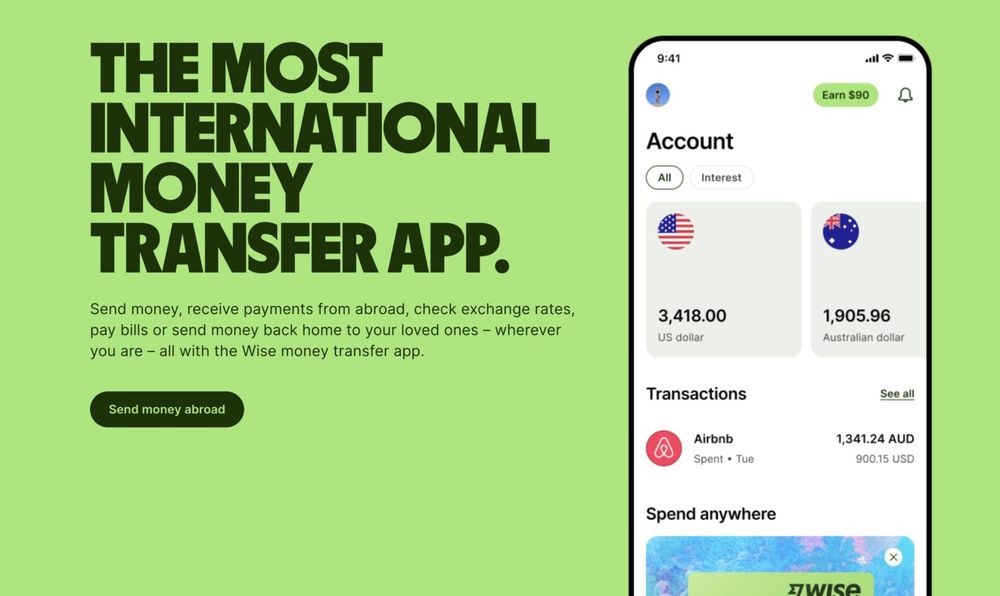
  • Competitive Exchange Rates: Look for a provider with exchange rates close to the mid-market rate. Some services apply markups, but others, such as Wise, are known for low markups on exchange rates, helping you get more for your money.
  • Low or Zero Fees: Many online services offer minimal or no fees for certain transactions, so it’s essential to check the fine print on fees per destination country.
  • Speed and Reliability: Depending on your needs, speed can be crucial, especially if you rely on funds for daily expenses. Some services provide instant or same-day transfers, while others offer slower options at lower costs.
  • User-Friendly Interface: A simple, mobile-friendly platform is especially valuable when you’re moving between locations and need quick access to your funds. Platforms with multilingual support can also be helpful for users whose first language may not be English.
  • Multiple Corridors: When you are someone who moves from place to place, you want a money transfer service that can adapt with you. Look for a platform that offers a variety of origin countries and destinations. That way you can get all the benefits of sticking to one money transfer service while getting the flexibility of sending from wherever, to wherever you need to. 

Top Money Transfer Services for Digital Nomads

Wise

Wise is popular among digital nomads due to its competitive exchange rates and transparent fee structure. The service operates with no hidden fees and uses the mid-market rate, which is the most accurate exchange rate. For those who need to send money internationally, Wise offers the flexibility to hold and manage multiple currencies in one account. This multi-currency feature is ideal for frequent travelers, allowing you to avoid conversion fees and keep your funds in the currency you need most.
Remitly

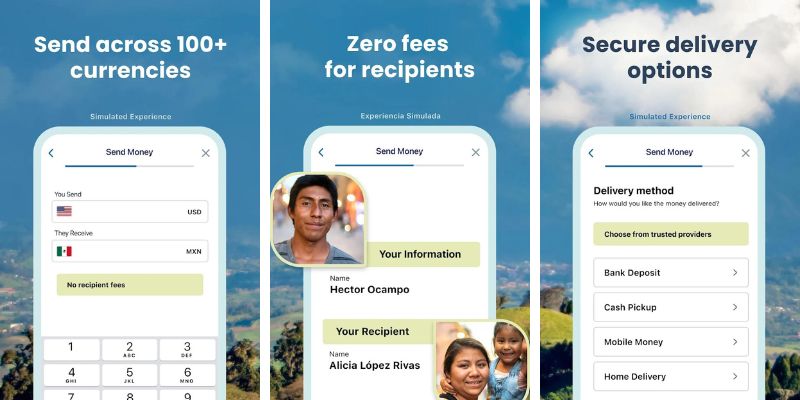
Remitly provides flexible transfer options with low fees, making it a cost-effective choice for digital nomads looking to send money abroad on a budget. It also offers users the ability to track exchange rates, giving you more control over the transfer cost. Remitly’s app provides a clear breakdown of transfer options, showing the exact fee for each destination. For digital nomads, this transparency can be invaluable, helping them manage finances accurately from country to country.
Xe

Xe has built a solid reputation for offering reliable international transfers and competitive exchange rates. The service’s platform is easy to use, allowing users to make money transfers directly from their bank accounts. Xe’s robust currency exchange options make it an attractive choice for digital nomads who want to send money internationally without dealing with high markups. The service is also known for its speed, with many transfers completing within the same day.

MoneyGram

MoneyGram is a trusted name in international transfers, offering extensive coverage across various countries. While MoneyGram fees can vary depending on the destination, its established network ensures a reliable and accessible option for online money transfers. MoneyGram’s mobile app is simple to navigate, and it provides several payout options, including cash pickups, which can be useful for digital nomads needing funds in remote locations.

Additionally, for those with access to a partnered Walmart location, MoneyGram is favored by those who like to use the Walmart to Walmart money transfer feature. If you are curious about it, feel free to read our guide on the Walmart to Walmart money transfer feature. 

Xoom

As a PayPal service, Xoom provides a convenient option for PayPal users who need to transfer money internationally. The platform is ideal for quick, mobile money transfers and supports multiple countries, making it suitable for digital nomads who frequently change locations. Xoom offers fast transfers to bank accounts and cash pickups, though it’s essential to check fees as they can vary by destination.

How Digital Nomads Can Save on Transfer Fees

Multi-Currency Wallets

Using a provider with a multi-currency account, like Wise, can help you avoid repeated currency conversion fees by holding funds in different currencies. This allows digital nomads to maintain a more predictable budget without facing surprise costs from currency exchange each time they transfer money.

Direct Bank Linkage

Some services offer reduced fees when you link your bank account directly to your money transfer account. This direct connection often means lower processing fees, which can be especially helpful for digital nomads making regular transfers. This approach also speeds up the process and offers a safer method for handling transfers.

Take Advantage of CompareRemit

Before finalizing a transfer, it’s wise to compare money transfer services with CompareRemit to see which service offers the most favorable terms for your current destination. With CompareRemit, you can quickly assess the best option in terms of rates, fees, and speed, ensuring that each transaction is both affordable and efficient at no extra cost to you.

How to Send Money Abroad for Free or at a Lower Cost

1: Look for Free-Transfer Promotions

Many services offer first-time users free transfers or discounted fees, which can be a cost-effective way to test out a new provider. These promotions are often available for new accounts and can save you money on initial transfers.

2: Referral and Loyalty Programs

Certain providers reward users who refer friends or family with discounted or free transfers. Additionally, loyalty programs may allow digital nomads to accumulate points or rewards, which can be used to offset fees. Staying loyal to one provider that supports multiple countries allows you to enjoy these perks worldwide.

3: Use CompareRemit for Informed Decisions

CompareRemit makes it easy to evaluate different services based on your transfer destination and desired transfer speed. Checking CompareRemit each time you make a transfer can help you find promotions, better rates, and the fastest service for your current location, ensuring your funds reach their destination securely and affordably.

Conclusion: Choosing the Best Money Transfer Service with CompareRemit

Selecting a money transfer service as a digital nomad involves finding a provider that offers not only flexibility but also reliable global reach. The ideal service will allow you to send money from multiple origin countries to destinations worldwide, all while enjoying benefits like competitive exchange rates, low fees, and fast transfer times. By comparing options on CompareRemit, digital nomads can make an informed choice and ensure each transfer is as efficient and cost-effective as possible.

FAQs: Common Questions About Sending Money Internationally as a Digital Nomad

1. What is the best way to send money internationally with low fees?

The best way to send money internationally with low fees depends on your transfer needs and destination. Online money transfer services like Wise and Remitly are popular for digital nomads because they offer low fees and competitive exchange rates without hidden costs. By comparing rates on CompareRemit, you can find the best provider for your destination, ensuring you pay minimal fees on every transfer.

2. Can I send money abroad for free, and how?

Yes, it is possible to send money abroad for free, especially for new users or first-time transfers. Some services offer promotional free transfers or reduced fees for new customers. Additionally, certain loyalty programs and referral discounts can also make transfers more affordable or even free. Check CompareRemit for the latest promotions from top providers to find opportunities for cost-free transfers.

3. How do exchange rates affect my international money transfers?

Exchange rates directly impact the amount your recipient will receive. A higher exchange rate is generally more favorable when you’re sending money internationally, as it increases the value of your funds in the recipient’s currency. Some services, such as Wise, offer mid-market exchange rates, which provide more favorable conversions with fewer hidden markups. Before transferring, always compare exchange rates on CompareRemit to ensure you’re getting the best possible value.

4. Which service has the lowest fees for international transfers?

The service with the lowest fees for international transfers varies depending on factors like the amount you’re sending, the origin, and the destination country. Platforms like Wise, Remitly, and Xe are known for competitive, low-fee transfers. To find the best option for your specific needs, CompareRemit provides up-to-date comparisons on fees, rates, and transfer times across top services.

5. Is there an easy way to compare money transfer services?

Yes, the easiest way to compare money transfer services is by using CompareRemit. This platform allows you to quickly see how each provider stacks up in terms of fees, exchange rates, and transfer speeds. By inputting your origin and destination countries, you can view a side-by-side comparison of top money transfer services, making it simple to choose the best one for your international transfer needs.

6. Can digital nomads send money internationally from multiple origin countries?

Absolutely. Many money transfer services, such as Remitly, Wise, and Xe, support transfers from a wide range of origin countries. This feature allows digital nomads the flexibility to stay with a trusted provider, regardless of where they are currently located. Using a single provider with international reach not only makes transfers easier but also allows digital nomads to take advantage of loyalty benefits.

 4813 views
Rate article:
(0.0)
 
 
Money Transfer FAQ's
Related Articles
dollar-to-php-exchange-rate-today
Dollar to PHP Rate Today for Remittances

In the Philippines, remittances are lifelines for millions of families. Every dollar sent helps cover essentials like household expenses, school fees, business needs, or unexpected emergencies. Understandably, then, even slight shifts in the exchange rate can make a significant difference for Overseas Filipino Workers (OFWs) and others sending money back home.In this comprehensive guide, we cover everything from the US dollar to the PHP peso exchange rate today, to why rates fluctuate, and how you can make the most of your remittances.US Dollar to PHP Peso Exchange Rate TodayThe US Dollar to PHP Peso exchange rate today is approximately PHP 55.85 per $1 USD. For the most accurate and up-to-date rates, please visit the Bangko Sentral ng Pilipinas (BSP) website.Why Don’t You Always Get the Rate You See?While the BSP’s official rate provides a good reference point, most remittance services and currency exchange platforms don’t offer that exact rate to consumers. Instead, they apply a markup. This means that the rate you get is slightly lower than the one you see.For instance, if the mid-market rate is PHP 56 per $1, a remittance provider might offer you only PHP 55.20 or even PHP 55, depending on their profit margins. Additionally, many also charge a separate transfer fee, which further reduces the amount your recipient ultimately receives.Understanding the Mid-Market RateThe mid-market rate, also known as the interbank rate, is the rate at which banks and financial institutions exchange currencies with one another. It's considered the "real" exchange rate, but it's not typically what consumers get.Here's where platforms like CompareRemit become incredibly useful. They show current dollar exchange to Philippine peso rates as well as transfer fees from multiple providers side by side. Viewing these together helps you choose the most cost-effective option for sending money to the Philippines.USD to PHP Exchange Rate History (2024)The year 2024 began with the US dollar trading at around PHP 55.80. Over the course of the year, the peso weakened, and the exchange rate peaked at PHP 59.435 on December 18, 2024. That’s roughly a 6% to 7% increase, highlighting how currency fluctuations can significantly impact remittances and import costs.How Are Things Looking in 2025?As of June 2025, the USD to PHP exchange rate stands at approximately PHP 55.68. The highest rate so far this year was PHP 59.009 on January 10, while the lowest was PHP 55.350 on May 25. This shows some volatility. But overall, the peso has regained some strength since the start of the year.USD to PHP Outlook: What to Expect Next?Forecasts for the USD to PHP exchange rate over the next year vary widely. Some analysts expect the peso to strengthen, potentially pushing the rate closer to PHP 48.86 by mid-2026. Others anticipate it hovering around PHP 58.69 by the end of 2029, pointing to long-term depreciation.Highest Dollar Exchange Rate to PesoThe highest dollar exchange rate to peso was recorded in December 2024, when the Philippine peso dropped to approximately 59–60 PHP per US dollar. This spike was driven by factors such as uncertainty around the US presidential election and interest rate policies from the US Federal Reserve. Additional factors included the Bangko Sentral ng Pilipinas’ interest rate cuts and rising inflation expectations in the Philippines. Global geopolitical tensions also boosted demand for the dollar, further weakening the peso.When is the Best Time to Send Money to the Philippines?In general, it's best to send money when the peso is weak against the dollar. This will give you a higher dollar-to-peso PHP exchange rate and allow your recipient to receive more pesos for every dollar you send. So, weakening of the peso works in favor of Filipinos working in the US.Remember, keeping an eye on these trends and using comparison platforms like CompareRemit can help you time your transfer smartly and maximize its value.Practical Tips to Get the Best Exchange Rate When Sending Money to the Philippines1. Compare money transfer service providersDon’t rely on a single provider every time. Use CompareRemit to evaluate different money transfer services. With it, you can instantly check:Real-time dollar to peso PHP exchange rate todayThe best transfer feesFastest transfer speedsCompareRemit even lets you compare transfer services in tabular format. Click on “FIND THE BEST RATES,” select the service, and choose compare.2. Look for a locked-in exchange rateSome providers allow you to lock in the exchange rate at the time of the transaction. This protects you from rate drops and ensures your recipient gets the expected amount, even if the transfer takes a few hours or days to complete.3. Time your transfers strategically The US Federal Reserve and geopolitical events influence interest rates. These include elections and conflicts, and can significantly affect the US dollar to PHP peso exchange rate. Use CompareRemit to monitor rates, as well as the best timing for your transfers. 4. Adjust your strategy for small vs. large transfersFor smaller amounts, aim for low or zero transfer fees. For larger transfers, prioritizing a competitive exchange rate is important, as it can help you save thousands of pesos.  5. Check for full creditSome platforms may offer zero fees but may deduct some amount from what you're sending. Confirm all charges beforehand so that your recipient gets the full credit. 6. Avoid weekend transfers Foreign exchange markets are closed on weekends. Unless it is very urgent, avoid sending any money during weekends.7. Choose the right payment methodPaying via bank transfer or Automated Clearing House (ACH) is often more cost-effective than using a credit or debit card, which may incur additional processing fees.  How to Use the CompareRemit Platform and App for Remittances?You can visit the CompareRemit website directly to find money transfer service providers and compare them on various fronts. If you prefer using your smartphone for easy access, download the CompareRemit app from the Google Play Store or the App Store. After setting up your profile: Go to the USD to PHP rate comparison page.Confirm USD as the sending currency and the Philippines as the receiving country.Enter the amount you wish to send.Click on "FIND THE BEST RATE".Instantly view multiple providers and compare their rates, transfer fees, transfer time, and final PHP received.Select the best option you find fit and click on "Learn More" to continue your transfer on the provider's website.Once you have done your due diligence and chosen a service provider on CompareRemit, you can proceed with the money transfer process. Here's how:Register an account with your selected service.Provide ID and address proof for verification.Add your preferred payment method.Enter your recipient’s details.Select how the money should be delivered (e.g., bank deposit or cash pickup).Enter the transfer amount and confirm the transaction.Make the payment using your preferred method.You’ll receive a confirmation once the transfer is complete.Send USD to PHP With ConfidenceAs you plan your next transfer to your recipients in the Philippines, consider the current dollar exchange rate to the Philippine peso and decide what factors are most important to you: speed, the most value for money, or the least amount of fees.Don’t forget to use the CompareRemit calculator to simplify your remittance process; get access to transparency and peace of mind for your hard-earned money.Frequently Asked Questions (FAQs)Q: How do I know if I am getting a good USD to PHP exchange rate when sending money?You can check the mid-market rate on Google or financial websites like XE or Bloomberg, then compare it to what your remittance service is offering. If the gap is significant, you might not be getting the best deal.Q: Is it better to send money through a bank or a money transfer service?Bank transfers are safe and secure, but can be slow and may offer less favorable exchange rates or higher fees. Money transfer services, on the other hand, often provide faster delivery, better rates, and more options, such as cash pickup or mobile wallet transfers. This makes them a more cost-effective choice for many senders.Q: What additional charges should I watch out for when transferring money internationally?Beyond the transfer fee, be aware of exchange rate markups, receiver-side bank fees, or service charges for specific payment methods, such as credit cards. Q: Is it better to send money directly to a bank account or for cash pickup in the Philippines?Bank account deposits are usually cheaper and more secure for recurring transfers or larger amounts. Cash pickups are useful when recipients lack access to a bank, need money urgently, or reside in rural areas. However, cash pickup services might charge more or offer slightly lower exchange rates.Q: Do remittances from the US to the Philippines get taxed?Generally, personal remittances sent to family members in the Philippines are exempt from tax. However, large transfers, business-related payments, or frequent high-value remittances may invite scrutiny and taxes under local or international laws.Q: What happens if the exchange rate drops after I initiate a transfer?If your remittance provider doesn't offer a locked-in rate, the amount your recipient gets may be lower if the exchange rate falls before the transfer is processed. Choose services that allow rate locking, which ensures the agreed-upon rate holds even if there are fluctuations during the transfer time.

money being exchanged into foreign currency
Best Ways to Skip Foreign Transaction Fees Abroad

Using your card overseas might feel convenient at first, but extra charges can quickly add up. Each international purchase can slowly eat into your budget due to foreign transaction fees. These charges, usually between 2.5% and 3.5%, may appear small, but they can take a noticeable toll on your spending when traveling abroad.For instance, if you use your card for a $1,000 purchase abroad, you could unknowingly pay up to $35 more. Do that a few times, and the extra costs can add up fast.This is why it helps to plan ahead. Knowing how foreign transaction fees work and where they come from can help you avoid them and better manage your travel spending. Up next, we’ll share seven practical ways to keep these charges away.7 Ways to Avoid Foreign Transaction FeesForeign transaction fees are extra charges applied when you buy something outside your country or use a different currency. Your card provider usually adds these fees when the payment goes through an international network or involves converting currencies.Here are some of the most effective ways to reduce or remove these unnecessary charges:1. Skip currency exchange at airports or hotelsWhile it may seem convenient, exchanging currency at airports or hotels usually means getting poor rates. These counters often include high markups, which reduce the actual value you receive.For instance, if the market rate is 1.10 units of foreign currency for 1 unit of your currency, airport rates may drop to 1.05 or lower. That small gap can cost you more during bigger exchanges.Instead, consider using trusted forex outlets in the city or authorized digital apps that allow you to lock in better rates before you travel. A little research, along with tools like CompareRemit, can help you track better rates in advance.2. Exchange currency in major cities rather than tourist areasAfter deciding against exchanging money at airports or hotels, the next wise step is choosing the right location. Where you exchange your currency matters more than most people think.Tourist-centric areas and remote spots usually have fewer exchange options, resulting in less competition and higher rates. In contrast, big cities often have more authorized money exchangers, offering better rates and clearer pricing.Before traveling, take a few minutes to look up and compare rates in the city you’re visiting. This simple step can help you hold on to more of your money.3. Make smaller, strategic ATM withdrawalsOnce your currency exchange is settled, it’s smart to think about how you’ll access cash during your trip. Using ATMs overseas can be convenient, but only when approached with care. Many foreign ATMs charge both a flat fee and a percentage-based currency conversion cost.To get better value, try withdrawing slightly larger amounts less often, instead of making several small withdrawals. Choose ATMs linked to trusted networks like Cirrus or Visa Plus, and use machines located inside bank branches for added security and fewer hidden charges.If you ever need to send money back home quickly, consider digital transfer methods to save both time and extra costs.4. Opt for credit cards with low or no foreign transaction feesWhile ATMs are great for managing cash, your card expenses need equal attention. Many credit cards quietly charge foreign transaction fees each time you spend abroad. Over the course of a trip, those small charges can quickly add up to a substantial sum.A smarter move is to opt for a credit card that includes travel Insurance for international use. Several providers, and even some banks, now offer cards with zero or low forex markup. Many of these come with added travel perks like built-in travel insurance, airport lounge access, and even interest-free cash withdrawals.For regular travelers, such cards offer more than just ease of use. They help you save money and improve your travel experience. Taking time to explore card options before your next trip can go a long way in avoiding those extra costs.5. Carry cash or use prepaid forex or travel cardsCarrying some local currency before your trip gives you better control over exchange rates and helps you avoid expensive last-minute exchanges. Cash is also useful in places where cards aren’t widely accepted.To protect your money, consider splitting it into smaller amounts and storing it in different places, such as your wallet, a money belt, or a hotel locker. This lowers the risk of losing everything at once.Alternatively, prepaid travel cards offer a convenient middle ground. You can load them with foreign currency at fixed rates ahead of time and use them just like debit cards abroad. Choosing a prepaid card with no foreign transaction fees can help you save even more by avoiding extra charges with every swipe. Still, be sure to check for hidden charges, like inactivity or ATM fees, and compare them with credit card fees to choose what suits you best.6. Buy foreign currency from your bank before you travelBanks usually offer better exchange rates than airport kiosks or hotels. Getting your foreign currency early from your bank is often a smart and cost-effective option. You can do this through internet banking, mobile apps, or by visiting a nearby branch. Since the process can take a few days, it’s best to plan if you have travel dates confirmed.Understanding how international currencies work and how rates shift can be useful when deciding when to exchange. This helps you avoid last-minute issues with poor rates. To easily check and compare rates before buying, tools like CompareRemit’s currency comparison can guide you in making clear and confident choices.7. Skip traveler’s checks as they’re largely obsoleteTraveler’s checks were once a reliable way to carry money overseas, but they’re now rarely used. Most places no longer accept them, and cashing them can be slow and inconvenient. They often come with extra fees and don’t offer the flexibility of modern tools.Today, better options include multi-currency cards, digital wallets, and credit cards with minimal or no foreign transaction fees. Unless you’re going somewhere extremely remote where they’re still useful, it’s better to avoid traveler’s checks altogether.Bonus Tip: Best Debit Card with No Foreign Transaction Fees for Global UseCredit cards are often used for travel, but many people choose not to rely on them abroad, which is completely understandable. Several banks now offer the best debit cards with no foreign transaction fees, specifically designed for international use. These cards let you shop and withdraw cash overseas without unexpected fees, making them a smart choice for budget-minded travelers.  Key features to consider when picking a card are:Membership in international ATM networksNo foreign exchange markupLive currency conversion ratesSome cards even come with added perks like travel insurance or emergency card replacement, helping you travel smarter without relying solely on credit. Apart from debit and credit cards, you can also explore some reliable apps for international money transfers to send money abroad safely and efficiently when needed.Keep More of Your Money While Exploring the WorldTravel should be about new experiences and making memories, not worrying about hidden fees nibbling away at your budget. With a little foresight and a better understanding of how currency exchange works, you can travel more confidently and spend without those nagging extra charges.Each step adds up to big savings, such as choosing a zero-forex-markup card, avoiding airport kiosks, or comparing exchange rates before you go. Platforms like CompareRemit make it easier to spot the best rates and smarter ways to send or spend money overseas. So before your next trip, plan meticulously, and let your finances travel as smartly as you do.Frequently Asked Questions (FAQs)Q: Do all banks charge foreign transaction fees by default?Many traditional banks still charge foreign transaction fees, but not all. Some newer online banks and fintech services offer cards and accounts meant for global use, which often come with zero forex markup or no foreign fees.Q: Are mobile wallets like Apple Pay or Google Pay free of foreign transaction fees?The fees depend on the card connected to the wallet. Mobile wallets themselves don’t charge extra, but if your linked debit or credit card includes foreign transaction fees, those charges will still apply when used abroad or in a different currency.Q: Do travel insurance plans cover losses from foreign transaction fees?Most travel insurance policies do not cover foreign transaction fees. These plans typically handle medical emergencies, missed trips, and baggage issues. Banking fees like these are not part of their coverage.Q: Are there any extra charges in prepaid travel cards?Some prepaid travel cards may include additional charges, such as reload fees, ATM withdrawal costs, inactivity penalties, or currency conversion charges, when used outside the loaded currency. Always review the fee structure before choosing.Q: How do foreign exchange rates fluctuate during travel?Exchange rates shift daily due to global market conditions, supply-demand balance, and central bank actions. Tools like XE or CompareRemit can help track these changes and guide currency conversion at the right time.

Home loans
Best Home Loan in India for NRIs: Low Rates, Easy Steps

For people living overseas, the pull of “home” and owning their residence rarely fades. Perhaps it's a cozy apartment in a bustling city, a serene house in their ancestral village, or even an investment property to secure their future.However, turning that dream into reality often involves financing. And navigating a home loan in India while living overseas can feel like a puzzle with the endless paperwork and processes.However, with the correct information and a clear understanding of the regulations, getting a home loan in India becomes more straightforward than you might think. This guide addresses the common questions and concerns faced by non-resident Indians (NRIs) and persons of Indian origin (PIOs) looking to invest in Indian real estate.Understanding Home Loans for NRIs and PIOsBefore diving into the specifics, let's first clarify who qualifies as an NRI or PIO for home loan purposes in India.Non-Resident Indian (NRI): An Indian citizen who has been residing outside India for 182 days or more during the preceding financial year for employment, carrying on a business or vocation, or for any other purpose indicating an indefinite stay outside India.Person of Indian Origin (PIO): A foreign citizen (excluding citizens of Pakistan, Bangladesh, Sri Lanka, Afghanistan, China, Iran, Nepal, and Bhutan) who:Held an Indian passport at any time, orHad a parent or grandparent who was a citizen of India under the Constitution of India or the Citizenship Act, 1955, orIs a spouse of an Indian citizen or a person falling under the above two categories.The Reserve Bank of India (RBI) governs these classifications, and it’s important to understand your status as it impacts the regulations around property ownership and home loans.Generally, NRIs and PIOs are permitted to acquire residential and commercial properties in India without prior approval from the RBI. However, acquiring agricultural land, plantation property, or farmhouses is generally restricted unless inherited.Eligibility Criteria for an NRI Home LoanTo qualify for a home loan in India, NRIs and PIOs must meet specific criteria, which may vary slightly by lender. Here's what most banks look for:Age: You should be between 21 and 60–70 years old at loan maturity.Employment type: Both salaried and self-employed individuals are eligible.Salaried: Typically requires one to three years of stable overseas employment.Self-employed: Must show steady income and proof of business existence.Income: Your monthly or annual income and current financial obligations help determine loan eligibility. Income thresholds differ based on your country of residence (e.g., the USA, the UK, the Gulf).Credit score: While you may not have an Indian credit score, lenders check your credit history in the country of your residence. A score above 700 is usually preferred.These criteria are also key when comparing lenders for the best home loan in India.Documents Required for Your Home Loan ApplicationHaving your documents ready can simplify and speed up your home loan in India. While requirements may vary slightly by lender, here’s a general list:Personal documents: Signed application form, passport-size photos, valid passport (mandatory for NRIs), visa/work permit, PAN card, proof of age and address (both Indian and overseas), PIO/OCI card (if applicable), and a notarized Power of Attorney if you're not in India.Income documents (Salaried): Employment contract, salary slips, overseas bank statements, NRE/NRO account statements, and local credit report. Income tax documents like Form W-2 (US) or P60 (UK) may be required.Income documents (Self-employed): Contracts, bank statements, company registration details, tax returns, and business financials.Property documents: Title deed, approved building plan, buyer agreement, and cost estimate for construction/renovation. Documents in non-English languages must be officially translated and attested by the embassy.Note that specific documents required will vary according to where you're getting the loan from.Current Home Loan Rates in IndiaAs of mid-2025, home loan rates in India typically range from 8.50% to 10.50% per annum. These rates apply to both residents and NRIs, though some lenders may offer special NRI schemes.To find the best home loan in India, it’s best to compare fixed and floating rates:Fixed rates offer stable EMIs throughout the tenure, which is ideal for those who prefer predictability.Floating rates vary with market trends and may start low but fluctuate over time.Both banks and non-banking financial companies (NBFCs) offer home loans. Explore different institutions to find the best home loan bank in India. Base your final decision on interest rates, processing fees, digital convenience, and customer service.Tax Benefits for NRI Home LoansIf you take a home loan in India, you may be eligible for tax benefits under the Income Tax Act, 1961. NRIs can claim deductions on both principal and interest payments. Here’s a list of the benefits:Section 80C: Deduction of up to ₹1.5 lakh on principal repayment, including stamp duty and registration charges.Section 24(b): Deduction of up to ₹2 lakh on interest paid for a self-occupied home. No cap for rented properties, subject to conditions.Sections 80EE & 80EEA: Additional benefits for first-time homebuyers and affordable housing.These deductions apply regardless of whether you choose the best home loan bank in India or an NBFC. Remember, tax laws change frequently, so consult a qualified NRI tax advisor to stay updated and compliant.Repaying Your Home Loan from AbroadTo repay your home loan in India from overseas, you must use an NRE or NRO account. Here’s how:NRE accounts hold foreign income and are fully repatriable, letting you transfer funds back abroad.NRO accounts manage income earned in India (like rent or dividends). While the principal is not repatriable, the interest is.All EMIs must be paid in INR from one of these accounts. To make the most of your repayments, choose a money transfer service that offers favorable exchange rates and minimal fees. Even a slight rate difference can lead to significant savings when transferring funds from the US or other countries.CompareRemit helps you check out top remittance providers side-by-side in real time, ensuring you find the best rates, speeds, and costs. Find the best provider for your needs and maximize the value of every transfer made toward your home loan in India or any related financial obligation.Your Home in India AwaitsFor many Indians living overseas, buying a home back in India can be a way to feel closer to their roots. Although the process may seem complex, understanding your eligibility, organizing documents, and comparing current home loan rates in India can make it much simpler.Exploring lenders, terms, and requirements before you lock in the best home loan in India may be a drawn-out process, but it is worth the time you spend on it. And when it comes to sending money for EMIs or related expenses, tools like CompareRemit can help you find trusted, low-cost money transfer services.CompareRemit’s real-time comparisons ensure you get the most value from every transfer. Start your journey today and make your dream of owning property in India a confident, well-informed reality.Frequently Asked Questions (FAQs)Q: Can OCI hold property in India?Yes, an OCI can generally hold immovable property in India, excluding agricultural land, plantation property, or farmhouses. This applies whether the property is purchased outright or with a home loan in India.Q: Can OCI get a PAN card?Yes, an OCI can obtain a PAN card. It's a mandatory document for most financial transactions in India, including applying for a home loan in India.Q: Can an NRI hold a savings account in India?Yes, an NRI can hold savings accounts in India, specifically NRE and NRO accounts. These accounts are essential for managing funds, including for your home loan in India repayments.Q: Which is better, NRE or NRO?Neither is definitively better; they serve different purposes. NRE accounts are for foreign earnings and are fully repatriable, ideal for sending funds from abroad. NRO accounts manage income earned in India and can receive remittances.Q: Do I have to pay tax in the USA if I sell property in India?As a US citizen, your worldwide income is taxable. Selling a piece of property will be considered income.

Download the CompareRemit App
Personalize your CompareRemit experience with your preferred corridor and receive target exchange rate notifications, seamless transitions to partner apps, and real-time comparisons of top remittance providers at your fingertips.

Get Listed or Advertise

Download Our Free App

Try our faster, enhanced mobile app for a better experience

CompareRemit App