USD INR ₹ 94.96
GBP INR ₹ 127.54
CAD INR ₹ 66.56
News

USD vs. INR: Why Is The Indian Rupee Falling Against The US Dollar?

Updated on April 07, 2022 12:00 am
USD/INR Falling

Indian Rupee is likely to touch 79.5 INR/1 USD in 2022.

The Indian Rupee has fallen to an all-time low against the US dollar, reaching levels of 1 USD to INR 76 in the recent past. UBS strategists expect the INR to weaken to 77 per dollar by the end of the year - more than 5% weaker than current levels - and depreciate further to 79.5 per dollar by September 2022.

If you are sending money to India from the US, a weaker rupee means more value for the same amount of dollars. Set up exchange rates alerts to get notified when the USD vs. INR reaches 79 rupees per dollar.

India received $83 billion in remittances in 2020, according to the World Bank. India is the top recipient of remittances globally, followed by China, Mexico, and the Philippines. Despite the worrying forecast, remittances to India continue to out-perform. Compare multiple money transfer specialists before sending money from the US to India or from India to the US.

The fall of INR vs. USD is driven by several factors, including weak export numbers, a drop in domestic consumption, increased energy prices, and fear of soaring inflation, among other reasons.

Here are some of the major factors that have impacted the fall of the Indian Rupee against the US dollar:

Rising Current Account Deficit

The Current Account Deficit refers to the net amount of a nation's imports minus the exports during a year, also known as External Balance.

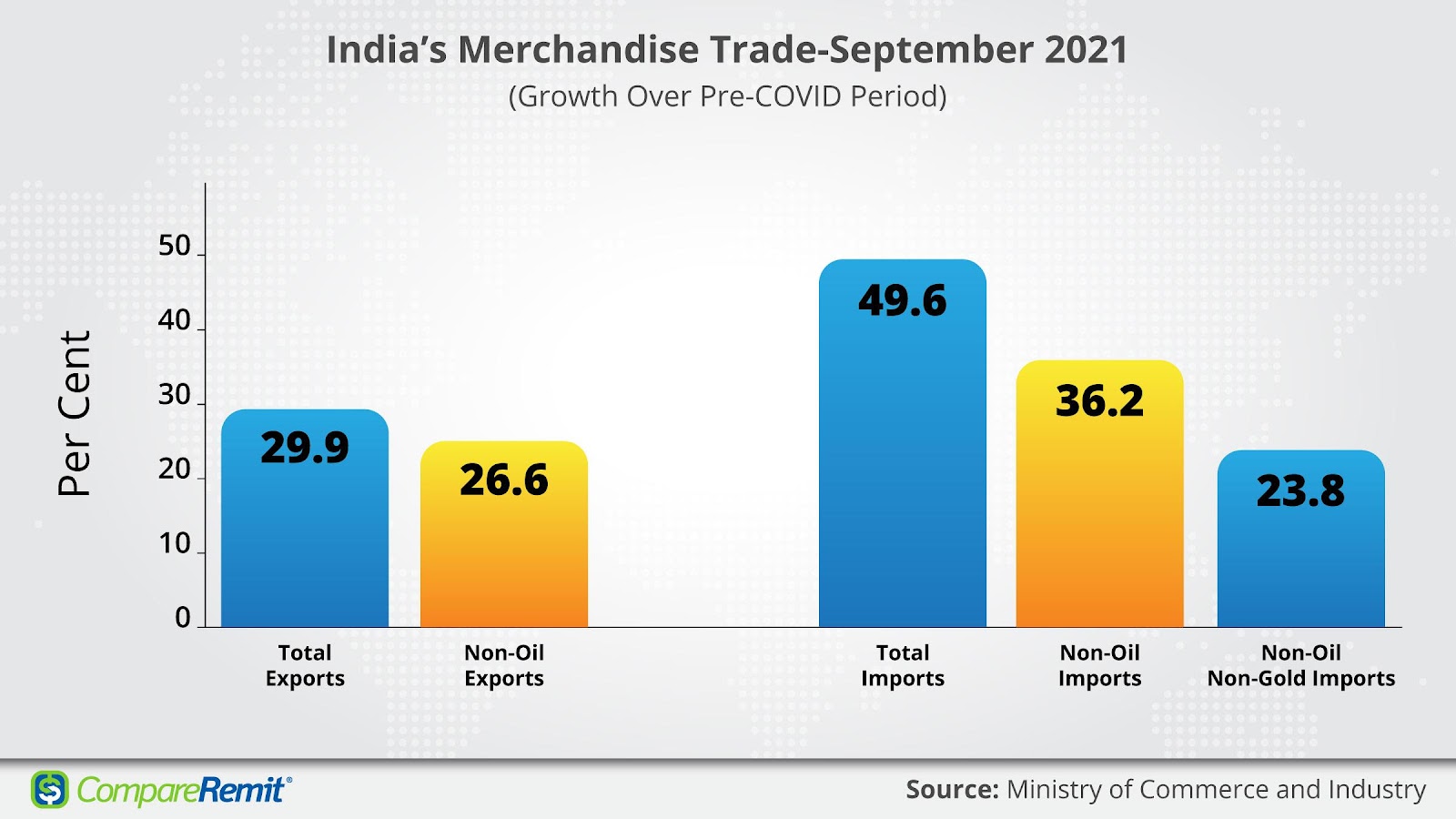
The Current Account Deficit is considered an important metric for gauging a country's economic health and stability. It gives you the difference between the inflow and outflow of foreign currency. A large trade deficit signals greater reliance on foreign capital inflows and further weakens the Indian rupee in the Forex market.

Even as all the economies in the world are going through an economic slump, an disproportionate trade deficit will result in creating a weak rupee value against the US dollar.
26pjB253KWHFYmfyUyKk5_HxH0jf_hwawy62N6R86hj4UbyEn8NVspukcr-2yxbN_heR_4ctpK7IMO3JoaQJgitx8BlPDvrGIcdly35wU7tZnNwhYhFhrqWWdpdnyeBVU60geCCM

India's current account balance posted a surplus of $6.5 billion, which is 0.9 percent of Gross Domestic Product (GDP) in the first quarter of the financial year 2021-2022 (Q1: FY 21-22) as against a deficit of $8.1 billion, which is one percent of GDP in the fourth quarter of the financial year 2021-2022 (Q4: FY 21-22).

The current account surplus was $19.1 billion, which was 3.7 percent of GDP in the previous financial year (Q1:FY20-21) for the same period, according to the Reserve Bank of India (RBI).

Significantly narrower current account deficits than in the first half of the last decade, and foreign exchange reserves at historically high levels have strengthened India's external position and reduced its vulnerabilities to external shocks. However, it remains vulnerable to volatile global crude oil prices as approximately 45% of all imports are energy-related.

Given that net exports are projected to drag on growth over our forecast horizon, the current account deficit is likely to remain an important factor driving INR performance relative to USD over our forecast horizon.

India's current account deficit is expected to rise due to increased crude oil prices, expansionary fiscal policy, and low GDP growth.


Impact Of Crude Oil Prices On USD vs. INR

Historically, the price of oil has been inversely related to the price of the U.S. dollar. The explanation for the relationship between oil prices and currencies is based on two primary factors:

  1. Crude oil contracts are in USD
  2. USD is the most traded currency in the world

To trade crude oil, countries around the world use barrels for units and USD in currencies. Post-Covid restrictions, as economies start their long journey to recovery, crude oil prices reached a 3-year high.

For a country like India that is highly dependent on crude oil imports, it has a negative impact on the Indian rupee against all major foreign currencies, especially against the USD.

When the USD is strong, you need fewer USD to buy a barrel of oil and vice-versa. India needs USD to buy crude oil, so a weaker rupee means you need more rupee to the same amount of USD and barrel of crude oil. Therefore, when the INR falls against the USD, these import costs rise.

As a net importer of oil, INR has a huge impact caused by any fluctuation in USD and crude oil prices.

F17D6FB1-47EF-4D5A-B5D2-247A7A8416FA.jpeg

Impact Of Interest Rates On USD vs. INR

The first question that comes to our mind is - what is the relationship between interest rates and exchange rates?

Let's understand the definition of both interest rates and exchange rates before we explain how it impacts USD vs. INR.

Interest is the amount a lender charges to a borrower as a portion of the loan given by the lender, usually expressed as a percentage for a particular period of time.

The foreign exchange rate is the value of one currency in relation to another. The relationship is stated as Currency 1/Currency 2, such as USD/INR, where the exchange rate shows the price of the USD in relation to INR.

For investors, a high-interest rate means a higher return vis--vis other currencies. To take advantage of the yield, investors will most likely move their investments* to countries with higher returns, which will increase the demand for the currency and further strengthen it vis--vis other currencies.

*Investments with a forward cover to protect returns in absolute terms

Amid the inflationary pressure, the Federal Reserve is looking at interest hikes as a measure. This will, in return, have an impact on all USD currency pairs, including USD/INR.

Keep in mind that beyond the US, interest rate differences between India and other emerging markets beyond the US could also have additional pressure on INR.

Other major factors that impact the interest rates are central banks' policies, financial system, government spending, unemployment rates, and inflation.

Fiscal Deficit Impact On USD vs. INR

A Fiscal Deficit is defined as a net negative in the government's income compared with its spending. A fiscal deficit is usually calculated as a percentage of GDP or total amount spent in excess of income.

Current Fiscal Deficit is when the government borrows more money to fund expenses instead of collecting revenues from taxes and other sources. This leads to a decline in total tax revenue, which could impact economic growth.

The Current Fiscal Deficit is considered a leading indicator of a country's creditworthiness. When there is a spike in the Current Fiscal Deficit combined with negative exports growth, it may indicate that an economy may be entering a recession, and a higher cost of borrowing is guaranteed.

A deterioration of the current fiscal deficit can happen for many reasons. It might simply reflect lower tax revenues due to weak economic conditions. Alternatively, it could also mean that governments are taking advantage of low-interest rates to increase spending.

To reduce the deficit, the government needs to decrease spending and increase income. In any case, a spike in fiscal deficit has a negative effect on USD vs. INR.

In conclusion, USD and INR are both floating exchange rates, meaning that a currency price of a nation is set by the supply and demand relative to other currencies in the Forex market. However, central banks have various measures to intervene to keep a check on a free-falling or a spike in their exchange rates.

Central bank interventions through buying and selling of foreign currencies and setting new interest rates for the country to bolster export competitiveness, help increase foreign exchange earnings, and shore up reserves.

Regardless of the steps to stabilize its currency, its fortunes are tied to external factors. The continued weakness in domestic demand growth is likely to keep pressure on INR. Further selling pressure on INR is likely amid rising crude oil prices and a widening trade deficit.

If you send remittances regularly, we recommend using a money transfer specialist who offers the highest exchange rates.

 58121 views
Rate article:
(5.0)
 
Money Transfer FAQ's
Related News
us-tariffs-on-mexico-2025
US Tariffs on Mexico: What’s New in 2025

If you send money to Mexico to support loved ones or pay vendors, changes in tariffs directly affect you. In 2024, Mexico received a record $64.7 billion in remittances from the US. But new US tariffs on Mexico in 2025 are shifting the rules of trade. And yes, they could affect the amount your loved ones actually receive.These tariffs, tied to both trade and security policies, are already influencing exchange rates and transfer costs. A new 30% tariff on Mexican imports takes effect in August 2025, and the Mexican peso is feeling the heat.That’s why now’s the time to be smart about how you send money to Mexico. In this guide, we’ll break down the current US tariffs on Mexico, examine their impact on remittances, and show how tools like the CompareRemit exchange calculator can help you stretch every dollar further.What’s the Latest on US Tariffs on Mexico in 2025Tariffs have always shaped US-Mexico trade, from NAFTA to the USMCA. But summer 2025 has brought major shifts. Here’s a round-up:New 30% tariff starts August 1: On July 12, US President Donald Trump announced that all imports from Mexico will face a 30% tariff, up from 25%. This follows failed negotiations and was confirmed via official channels and social media.USMCA exemptions uncertain: It’s still unclear if the new 30% tariff will exempt USMCA-compliant goods. Businesses are awaiting formal guidance.Sector duties remain: Non-compliant auto parts and vehicles continue to face a 25% tariff. Steel imports are subject to a 25% tariff. Aluminum imports from Mexico now face a 25% tariff as of March 12, 2025, replacing the previous 10% rate under Section 232. Select produce, such as tomatoes and other non-compliant agricultural products, continues to face increased duties. Energy and potash imports remain subject to a 10% tariff if non-compliant.No retaliation from Mexico (yet): Mexico has not responded with tariffs. Instead, it continues high-level talks with the US to protect its economy.Binational working group formed: A permanent task force now manages trade, migration, and economic coordination between the two governments.Underlying drivers: The US cites national security, fentanyl trafficking, migration, and a $152 billion trade deficit with Mexico as justification.With the August 1 deadline past us, uncertainty looms if things will improve. If USMCA exemptions are revoked, a large share of Mexico’s $600 billion in exports could be affected. Businesses are preparing for higher costs and possible supply chain disruptions.The Impact of US Tariffs on Mexico in 2025Let’s get specific. The impact of US tariffs on Mexico is being felt across exports, inflation, jobs, and remittances. Here’s what’s affected:Exports: Roughly $300 billion in non-compliant Mexican exports now face 25% tariffs. Mexico’s overall export volume could fall by 10–15%, with the auto and electronics industries hit hardest. If these measures persist, they may drag down Mexico’s GDP in 2025.Inflation: In the US, vehicles subject to tariffs are priced up to $4,700 higher, with many models seeing increases in the $4,000 to $5,000 range depending on their supply chains and import content. Food prices in Mexico, particularly for staples like avocados and tomatoes, are rising due to higher import costs and a weaker peso, which are fueling broader consumer inflation.Jobs: Stellantis and other automakers have cut US jobs and paused production in Mexico due to new tariffs. About 900 US workers were temporarily laid off, and operations at the Toluca plant in Mexico were halted. These moves are driving up costs and cutting output for manufacturers and small businesses on both sides of the border. Sectors like manufacturing, agriculture, and construction are also facing higher costs and uncertainty.Exchange rates: The peso has weakened through 2025. As of July 22, it trades at 18.68 per USD, fluctuating between 18.55 and 18.75. While this boosts remittance value, it also raises import prices and fuels inflation in MexicoTariffs and currency trends are evolving fast. Comparing rates and using tools like CompareRemit’s exchange rate calculator can help you get more pesos for every dollar sent.How Tariffs Affect Remittances to MexicoThe impact of the US tariffs on Mexico can hit households, too. Here’s what’s happening:Remittances are becoming more essential due to rising costs and job losses.A weaker peso gives recipients more value per dollar.But inflation erodes that value, and planning becomes difficult when rates swing often.For example, if you send $1,000 at 18.5 MXN/USD, your recipient gets 18,500 pesos. At 19 MXN/USD, they get 19,000 pesos. That’s a 500 peso difference and is worth watching.Will You Have to Pay More to Send or Receive Money?Let’s look at the bottom line. Will these tariffs hit your wallet directly? Possibly. Not from a direct fee hike, but due to spillover effects like:Money transfer companies may increase fees to manage risk.Banks charge $15–$50 per wire. Remittance services average $0–$15.Mexico may raise local taxes to recover revenue losses from reduced trade.Here's what you can do:Compare exchange rates on CompareRemit.Set alerts to catch the best timing.Use low-fee methods like mobile wallets or cash pickup.Here’s a comparison of transfer methods to Mexico:MethodSpeedFeesConvenienceBest forRemittance ServicesMinutes to 1 day (cash pickup/bank deposit)$0–$15 (bank-funded), $10–$30 (card-funded)Easy online/app process with trackingPersonal remittances, urgent transfersBank-to-bank transfer1–5 business days$15–$50 (SWIFT fees)Requires bank detailsBusiness or recurring paymentsMobile walletsInstant to hours$0–$5 (may include withdrawal fees)App-based; the recipient needs a walletSmall, tech-savvy transfersCash PickupMinutes to hours$5–$15ID and reference number neededRecipients without bank accountsMany money transfer services offer competitive rates and fast delivery. Check CompareRemit’s reviews to find reputable providers tailored to your needs, especially with the impact of the US tariffs on Mexico affecting exchange rates.What to Watch Out for in the Coming MonthsThe current US tariffs on Mexico may shift soon. Keep an eye on:USMCA renegotiations: The 2026 review could bring tighter rules of origin or new tariff terms. Any change may impact trade and remittance flows, especially with exemptions under debate.Election-year rhetoric: Tariff talk is heating up. A new 30% tariff kicks in on August 1, 2025, and ongoing political messaging is adding uncertainty and fueling market instability.New duties ahead: Sectors like lumber and pharma may be next. This could expand the tariff burden beyond autos, steel, and agriculture, raising costs and disrupting supply chains.Stay informed by following updates from official sources like the USTR and trade.gov, as well as market coverage from leading news services, to help you navigate the shifting landscape.The impact of US tariffs on Mexico may create challenges, but they don’t have to diminish your remittances. By understanding their economic impact and comparing money transfer options, you can ensure your money reaches Mexico without hassle.Use the CompareRemit USD to MXN exchange rate calculator to find the best exchange rates, lowest fees, and fastest transfer times. Your hard-earned dollars deserve to make the maximum impact. Don't let policy shifts eat into your remittances; save more pesos with every dollar using CompareRemit’s tools.Frequently Asked Questions (FAQs)Q: What are the Current US tariffs on Mexico in 2025?A 25% tariff applies to non-USMCA-compliant imports. Energy and potash imports face a 10% duty. USMCA-compliant goods are exempt. Starting August 1, 2025, tariffs on certain goods are set to increase to 30% unless further policy adjustments are announced.Q: Why has the US increased tariffs on Mexican goods?To address a $152 billion trade deficit, reduce fentanyl trafficking, control illegal migration, and encourage domestic production.Q: How do US tariffs on Mexico affect the USD to MXN exchange rate?Tariffs have contributed to a weaker peso by raising economic uncertainty. This increases remittance value in local currency but also raises the cost of goods in Mexico due to higher import costs and inflation. As of July 22, 2025, USD/MXN trades around 18.68.Q: Will remittance costs go up due to the new tariffs?Not directly. However, money transfer providers or apps may raise service fees or widen exchange rate margins to manage increased market risk. It’s wise to compare options regularly to keep transfer costs low.Q: What industries in Mexico are most affected by the US tariffs on Mexico?Auto, steel, aluminum, and agriculture are the most impacted sectors by the recent tariff measures, with additional discussion of expanding duties to sectors like lumber and pharmaceuticals.Q: How can I find the best way to send money to Mexico during tariff hikes?Use tools like CompareRemit’s comparison platform to evaluate fees, rates, and delivery speeds, and set alerts to transfer money when rates are most favorable.

Father son reunion
How To Find A Travel Insurance Policy That Covers Covid-19?

Going into 2024, we learned many lessons from COVID. While borders have reopened and life has gone back to practically how it was before, the desire to reconnect with loved ones and explore new destinations grows stronger. However, amidst the excitement of travel, it's crucial not to overlook the importance of securing adequate travel insurance, especially in the context of COVID-19. In this comprehensive guide, we'll explore the significance of travel insurance, highlight key considerations for finding policies that cover COVID-19, and provide actionable tips for selecting the right coverage to suit your needs.   The Importance of Travel Insurance in the Post-COVID-19 EraDespite the easing of travel restrictions and the gradual return to normalcy, the lessons learned during the COVID-19 pandemic have highlighted the necessity of travel insurance. While the threat of the virus may be diminishing, unexpected medical emergencies, trip cancellations, and disruptions remain a strong possibility. Travel insurance serves as a safety net, offering financial protection and peace of mind for travelers facing unforeseen circumstances, including those related to COVID-19.Understanding COVID-19 Coverage OptionsIn response to the pandemic, many travel insurance providers have adapted their policies to include coverage for COVID-19-related risks.There are two types of travel insurance you can opt for when looking for travel insurance, both covering different situations: travel medical insurance and trip insurance.  Travel Insurance: Provides comprehensive coverage for a range of travel-related emergencies, including medical expenses such as for hospitalization or medication for new injuries or illnesses that occur during one’s travels. It also typically includes benefits such as emergency medical evacuation and lost luggage reimbursement.In response to the pandemic, many travel insurance providers have modified their policies to address COVID-19-related risks. That is why some travel medical policies now include coverage of medical treatment expenses incurred due to COVID-19 during travel (if COVID was contracted during travel). Trip Insurance: Focuses specifically on protecting the financial investment made in a single trip. It typically covers expenses such as trip cancellations, interruptions, or delays, offering reimbursement for non-refundable expenses in case of unforeseen events.Similar to travel medical insurance policies, in response to the pandemic, many trip insurance providers have modified their policies to address COVID-19-related risks.  That is why some trip insurance policies now include coverage for cancellations or interruptions due to contracting COVID-19 prior to travel.Additionally, some policies offer "Cancel For Any Reason" (CFAR) coverage, providing flexibility for travelers to cancel their trip for any reason, albeit with eligibility requirements and time-sensitive limitations.There is no one-size-fits-all when it comes to Travel Insurance: some people travel regularly for work, some work for months and years to save up for a single trip, and some may have to travel urgently for a family emergency.Traditionally most travel insurance policies and plans cover expenses on account of medical emergencies, trip cancellation, interruption or delays, medical evacuation, and lost, damaged, or stolen luggage. However, given the current times, you must look for specific policies covering COVID19.Finding the Best Travel Insurance for COVID-19When selecting a travel insurance policy that covers COVID-19, here are some key features to look for in your travel insurance plan:Comprehensive Coverage: Look for policies that offer comprehensive coverage for COVID-19-related expenses, including medical treatment, quarantine accommodation, and trip interruption or cancellation due to the virus.COVID-19 Testing Coverage: Verify whether the policy includes coverage for COVID-19 testing required for travel purposes. Some insurers may cover the cost of testing as part of their COVID-19-related benefits.Quarantine Expenses: Ensure that the policy provides coverage for quarantine-related expenses, such as accommodation and meals, in the event that you're required to quarantine while traveling due to COVID-19 exposure.Trip Cancellation/Interruption: Opt for policies that offer robust coverage for trip cancellation or interruption caused by COVID-19-related issues, such as illness or travel advisories.Emergency Medical Coverage: Verify that the policy provides adequate coverage for emergency medical expenses related to COVID-19, including hospitalization, doctor visits, and medication.Pre-Existing Conditions: If you have pre-existing medical conditions, most comprehensive coverage plans will not include pre-existing medical conditions, but there are still some that do. Read up on whether or not the policy covers COVID-19 treatment for these conditions, as some insurers may have specific exclusions.Finding the Right Travel Insurance PolicyNavigating the plethora of travel insurance options can be overwhelming, but utilizing online travel insurance marketplaces simplifies the process. Platforms like VisitorsCoverage empower travelers to compare different policies, generate quotes, and access award-winning customer service representatives for assistance. By leveraging these resources, travelers can confidently select a policy tailored to their needs and providing comprehensive coverage for COVID-19-related risks.As travel has resumed in full swing, it is easy to feel like you don’t need to worry about COVID-19 anymore, but it is always good to prioritize your safety and financial protection. COVID-19 may have reshaped the travel landscape, but with the right travel insurance policy, travelers can navigate uncertainties with confidence. Whether embarking on a leisurely vacation, business trip, or family visit, investing in travel insurance offers peace of mind and ensures preparedness for any travel-related emergencies, pandemic or otherwise. Safe travels!

online money transfer mobile application
Taptap Send and CompareRemit Form Strategic Partnership

New York, 27/05/2023 – Taptap Send, the innovative mobile money transfer application, is proud to announce its partnership with leading remittance solution provider CompareRemit.com. With a focus on empowering immigrants, Taptap Send simplifies the process of sending money back home to India, Pakistan, Philippines, Bangladesh, Sri Lanka, and Nepal.Sending money across borders has long been a complex and expensive endeavor for immigrants supporting their families and loved ones. Taptap Send was developed to address these challenges, providing a user-friendly mobile application that streamlines and optimizes the money transfer process, all through the convenience of a smartphone.Taptap Send offers a range of features designed to enhance the experience for immigrants sending funds back home:Competitive Rates and No Transfer Fees: Taptap Send leverages technology to streamline operations, resulting in more affordable transfers compared to traditional methods.Mobile Accessibility: The Taptap Send mobile application ensures users can initiate money transfers anytime, anywhere.Transparent Pricing: Users are provided with upfront information on exchange rates, allowing them to make informed decisions and have a clear understanding of the total cost of the transfer.Taptap Send aims to break down the barriers faced by immigrants when sending money back home, enabling them to provide vital support to their families and communities with ease and efficiency.Through its partnership with CompareRemit.com, Taptap Send further expands its reach and impact, offering immigrants a comprehensive range of remittance solutions tailored to their specific needs and requirements.To learn more about Taptap Send and explore the various money transfer options available for sending funds to India, Pakistan, Philippines, Bangladesh, Sri Lanka, and Nepal, please visit the Taptap Send website.About Taptap Send:Taptap Send is a mobile money transfer service that simplifies and enhances the process of sending funds internationally. Designed with immigrants in mind, Taptap Send offers a user-friendly mobile application that empowers users to initiate money transfers conveniently and affordably, providing vital support to their families and loved ones across borders.Media Contact:Name: Anthony JacobTitle: Head of Growth, South AsiaEmail: [email protected]

Download the CompareRemit App
Personalize your CompareRemit experience with your preferred corridor and receive target exchange rate notifications, seamless transitions to partner apps, and real-time comparisons of top remittance providers at your fingertips.

Get Listed or Advertise

Download Our Free App

Try our faster, enhanced mobile app for a better experience

CompareRemit App