USD INR ₹ 94.60
GBP INR ₹ 125.04
CAD INR ₹ 65.39
Articles

The Rise Of Neobanks & Disruption Of The Financial Industry

Updated on July 08, 2021 09:20 am
Finance icons with a speedy background

Neobanks is the current buzzword in the FinTech (financial technology) ecosystem and is often considered as the digital disruptor in BFSI (banking and financial services industry).

This new breed of digital-only banks, mobile-only banks are posing new challenges to brick and mortar-based traditional banks.

Neobanks such as Monzo, Revolut, N26, Onjuno are challenging the old business model through feature-rich products and services, low cost, ease of use, and seamless online customer experience.

So What Exactly Is A Neobank? And Should You Switch To A Neobank For A Superior Banking Experience?

What Is A Neobank?

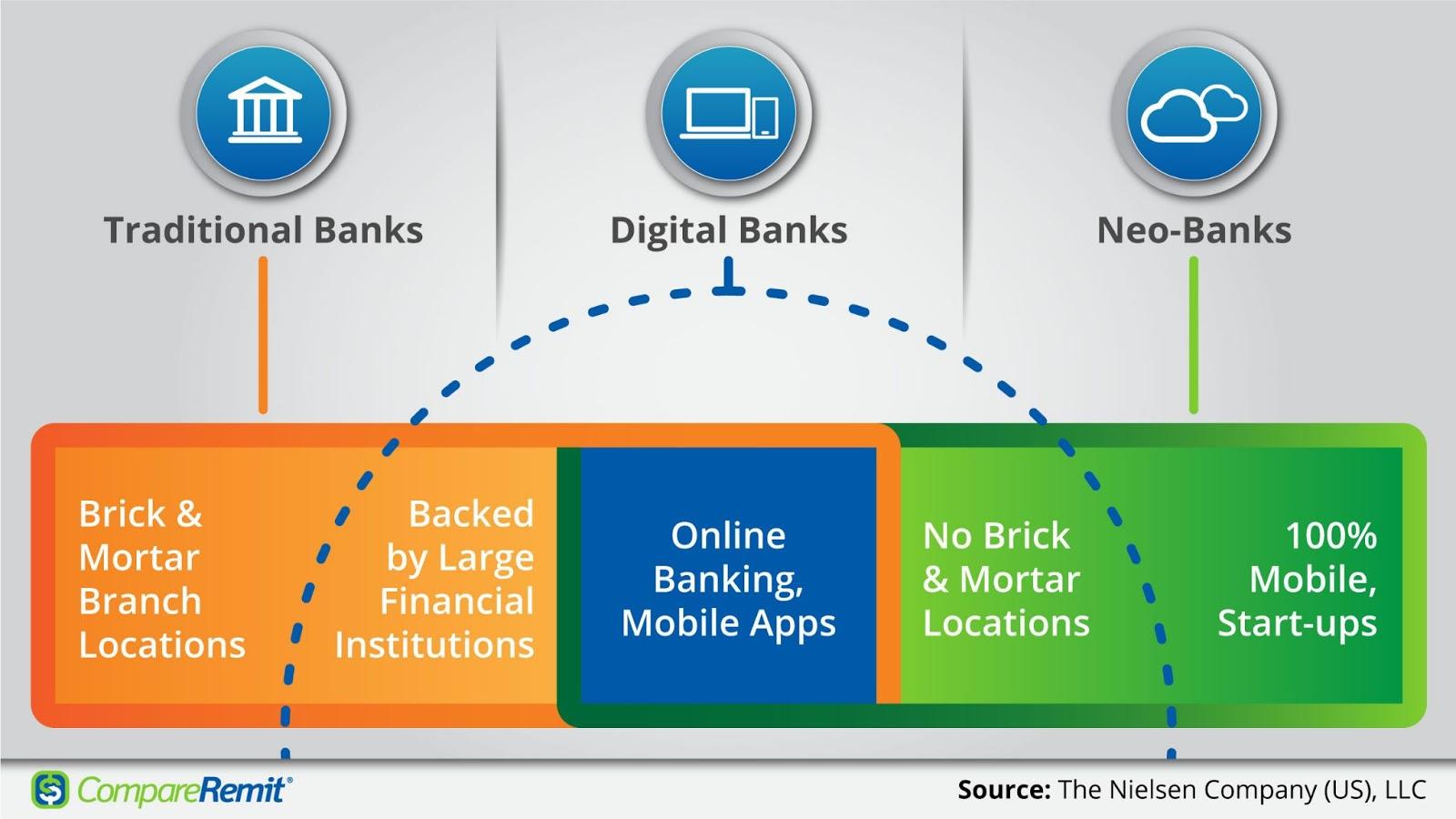
Neobanks, sometimes referred to as challenger banks, are fintech service providers that offer mobile and online banking with a focus on enhanced user experience, easy accessibility, and low or no-fee services. Neobanks are 100% digital and have no physical branches.

The moniker "challenger bank" was popularized in the U.K to refer to the various fintech banking startups that cropped up in the aftermath of the 2007-2009 financial crisis. These fintech firms are generally known as Neobanks in the U.S.

Since they challenge the traditional banks crippled with outdated infrastructure and legal systems with more customer-centric banking services and better convenience, the term 'challenger bank' is quite apt.
https://lh5.googleusercontent.com/mt_jl-3R9bWvddCmVx582DfTvXdDpKbm-z_0qAcBKhkuPU9p0Pkonvf5TNbuQkPREVRLEUwNAJepSDNtnDrayQGHR0g4eJXMTpBehQxps4DecstHXt0cuRwuYMjOIjs7yWeer-N5

How Does A Neobank Work?

As there are no physical branches, it operates mainly through a mobile application & digital or online platforms.

The app and website as the primary contact point of the customers is more feature-rich and more efficient than other ordinary banking apps.

They also tend to be faster and transparent than the big banks. This lets users have greater control over their money management.

Neobanks is powered by a data-driven decision-making process. These banks collect and analyze data, recognize patterns and trends to understand the behavior of the customers to come out with predictions or results that match consumer needs. They are able to provide highly customized and personalized services.

Neobanks offer a wide range of financial services including:

  • Checking and Savings Accounts
  • Payments and Money Transfers
  • Loans for individuals and companies
  • Credit and Debit Cards
  • Access to a wide network of ATMs domestically and internationally
  • Other services such as budgeting among others

What sets Neobanks apart from traditional banks are the innovative features and simplified processes including account opening in minutes, free debit cards, instant payments, lower prices, cryptocurrencies, peer-2-peer transfer, mobile deposits, mobile-budgeting tools, user-friendly interfaces, and more.

Types Of Neobanks

https://lh5.googleusercontent.com/iWojmQUIhtERq5En6lU_raxMKYu7mygS2PuGOuE-GKzaaueoOSXrG8K4dvA-kAc4NIC8aLZzAaNlIFHSAIlS5LLlM4x3L5NBpg1e_ZHbu6EvBXTu8gUPzSTygjnUWUmuRpidwpI2

Neobanks can have different operating models and are categorized into three main types:

  • Non-licensed Neobanks: They don't have a bank license of their own but are partnered with a traditional bank to provide banking services. These fintech firms utilize a wrapper around their partner bank's products and services. Example: Revolut, Chime
  • The second type is when traditional banks launch their digital-only initiatives which function as a Neobank
  • Licensed Neobanks: This third type has a digital banking license. They only exist in countries that allow stand-alone digital entities. Example: Monzo, N26, Sterling Bank

How Do Neobanks Make Money?

Neobanks' business model is different from the traditional banking institutions. A major chunk of their revenue comes from interchange fees paid by merchants when customers purchase goods and services using their debit cards. The interchange percentages can go up to seven times higher than those charged by banks.

Other strategies include freemium pricing strategies, multi-tiered subscriptions, and targeting specific niches. For example, OnJuno, a Neobank, is aimed at Asian Americans. OnJuno is known for offering an attractive saving rate of 2.15%. The OnJuno founders believe that it will serve the diaspora community in the U.S (typically South Asians and East Asians) which are numbered around 20 million, earning a higher average salary of approximately $50,000 per year, more likely to save plus are tech-savvy. Also, OnJuno is located in India which means costs are lower.

Global Market Size Of Neobanks

The neobanking sector was valued at $34.77 billion in 2020 and is expected to grow at a compound annual growth rate (CAGR) of 47.7% from 2021 to 2028 as per a market analysis report by Grand View Research.
https://lh4.googleusercontent.com/bnRsGMzgnqc55eRW7V71T6UB37LznSlA0VclCWww-U9vGsInZFIl61A79-c1o_ehYvij-rWu_sLK5w1iwYCKs5ySOKg3gAUYj8MWZEYDWgPOeT0ztA5Ek8sn2tc-fEoxh9yK6UK0

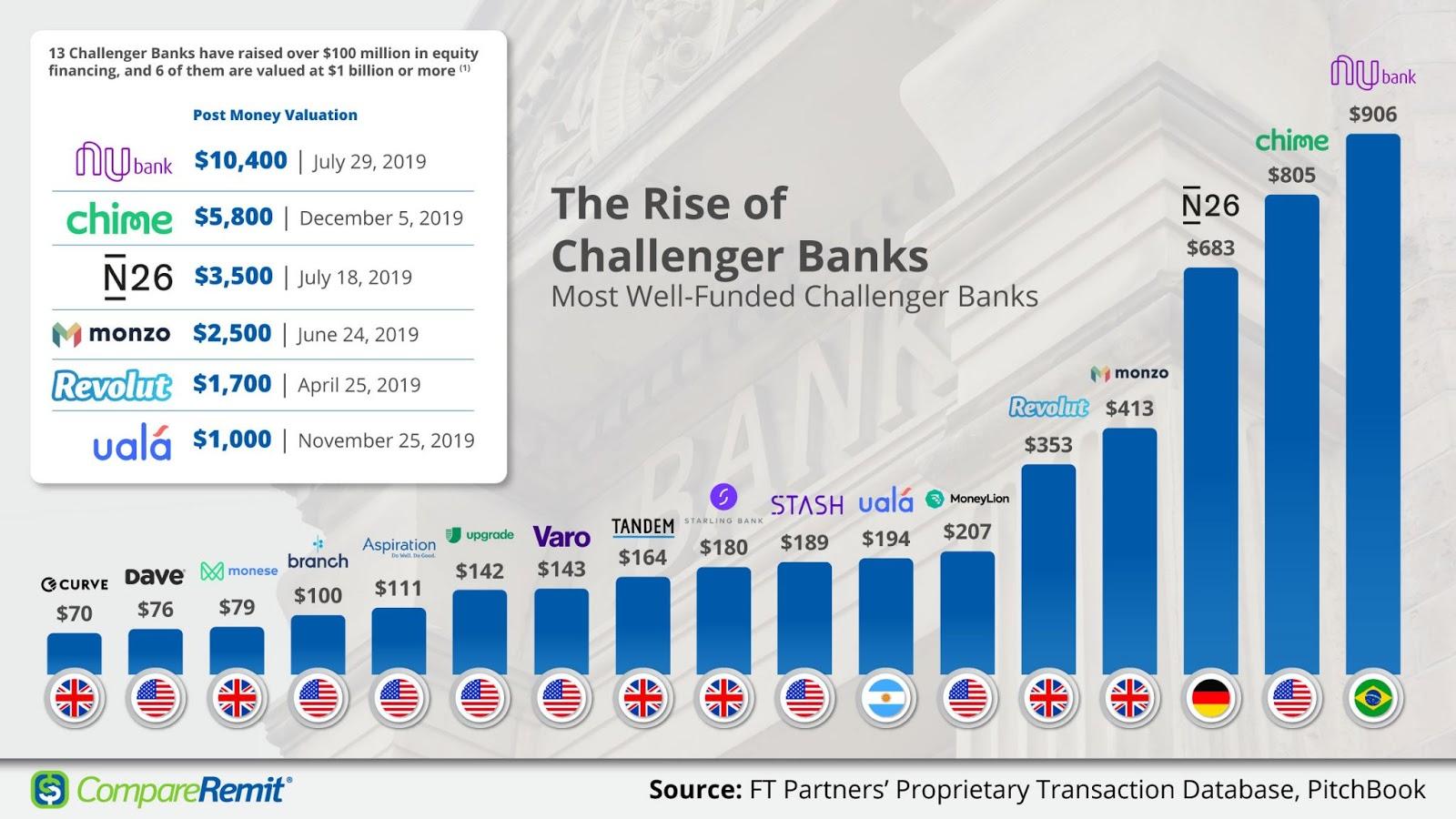
Neobanks are rapidly gaining popularity and have seen tremendous growth over the past few years, partly because of the increase in investments within the Fintech sector. According to a 2020 report by MEDICI Global, since 2018, a total of $5.627 billion has been invested, and in 2019, a record-breaking $4.361 billion have been poured into Neobanks.

Pitchbook, the PE/VC (Private Equity/ Venture Capital) data provider estimates that Neobanks will have 60 million customers in North America and Europe in 2020, and by 2024, it will reach over 145 million.

In the U.S., Chime is valued at $14.5 billion, becoming the most valuable U.S. consumer fintech with 12 million users.

What Are The Advantages Of Neobanks?

  • Convenience

With Neobanks, you have access to banking services at the convenience of your smartphone. Account opening is hassle-free and is done in minutes with minimal data requirements. Their added innovative features also allow you to manage your finances efficiently.

  • Seamless International Transactions

There is no differentiating line between national and international transactions with Neobanks. Unlike traditional banks, you don't need to upgrade your debit/credit card to transact internationally. Also, you get to save money on the cost of exchange rate on international transfers or purchases. For instance, Revolut doesn't charge any fees for currency exchange and their account accepts more than 100 different currencies.

However, it is worth noting that international money transfer function is not supported by most of the Neobanks as of now. Online money transfer companies offer the fastest and cheapest way to send money internationally.

International money transfer companies or cross-border payments service providers such as Remitly, Wise, Azimo, etc are integrating traditional banking services to their core services.

  • Low-Cost

Since Neobanks operates digitally, there are no operational and labor costs of running physical branches. This affords them to charge little or no fees for basic services such as free ATM withdrawals. They are much more cost-effective due to fewer regulations and no credit risks.

  • Superior Customer Experience

User-friendliness is a priority for Neobanks. Their apps are highly responsive, clean, and crisp, and well-designed to cater to the needs of customers. The extremely user-friendly interface is a major plus point.

  • Advanced Security Features

Neobanks are safe as they still have to abide by the regulators. They have some of the latest security features such as biometric verification, 2FA (2-factor authorization), RBAC (Role-Based Access Control), modern encryption technology among other security measures.

  • Better Reporting

NeoBanks provide better reporting to customers on their accounts & finances helping them plan and manage their money more efficiently


Should You Switch To Neobanks?

They are relatively new to the financial market, have limited services, and have not had the time to come up with products and services you will get from traditional banks.

Traditional banks are stepping up to the challenges, investing in new technologies, and financial tools to stay relevant in the current scenario. In addition, people have established trust with incumbent banking institutions despite the slow and outdated processes. Potential customers may be hesitant to adopt it. 

Since they lack brick-and-mortar branches, there is no in-person assistance when you are having difficulties with account-related issues. Neobanks may appeal to people who are tech-savvy and who grew up with internet access for almost everything.

Bottom Line

The pandemic has been a catalyst for the digital transformation in the banking sector. Having said that, a lot remains to be seen when it comes to Neobanks. While traditional banks have largely preserved their position, this may be changing as challenger banks are gaining traction.

On a global scale, the growth of Neobanks is an upward trajectory. Thanks to their attractive value propositions such as low rates, personal finance management features, and ease of use, Neobanks will continue to attract customers and investors.

 16195 views
Rate article:
(4.8)
 
 
Money Transfer FAQ's
Related Articles
what-is-fiat-currency
Fiat Currency: What It Is and How It Affects Your Money

Fiat currency, in simple terms, is the government-issued national currency. In the United States of America (U.S.A.), the dollar is the fiat currency. It is the legal tender, meaning it is used by American citizens for daily transactions and is required for paying debts and federal taxes. Unlike earlier times, modern fiat currency is not backed by any physical commodity, such as gold or silver. Instead, its value depends on supply and demand, as well as the stability and credibility of the government and its central bank that issues it.So yes, the dollar derives its value from public trust in the government and the Federal Reserve, as well as the stability of the American economy.However, the downside of fiat currency is that, since it is not tied to gold, silver, or any other commodity, its purchasing power erodes during periods of inflation. And, needless to say, fiat currency loses value when citizens lose faith in their government.Examples of Nations Losing Trust in Their Fiat CurrencyWhen public confidence in a currency collapses, the effects ripple through an entire economy. Here are real-world examples of countries facing that breakdown.1. Zimbabwe (Late 2000s)This Southeast African nation printed truckloads of money to cover government spending, which triggered hyperinflation. Prices doubled almost daily, and at one time inflation hit over 231 million percent. Citizens needed wheelbarrows of cash to buy just a loaf of bread. Eventually, the Zimbabweans abandoned the Zimbabwean dollar and switched to the U.S. dollar and other foreign currencies. They even turned to a barter system for their daily transactions.2. Venezuela (2016–2019)Years of economic mismanagement and dwindling oil revenue in this South American country led the government to print huge amounts of money, triggering inflation. Gradually, inflation spiraled into hyperinflation, wiping out savings as prices skyrocketed. Many Venezuelans turned to U.S. dollars, barter, or crypto just to survive.3. Argentina (Perpetually in Crisis, Most Recently 2018–2023)Argentina, again in South America, has long faced chronic inflation due to its debt crises and loss of confidence in government policies. Citizens often prefer U.S. dollars for savings, leading to a thriving black-market exchange rate. Persistent public distrust in their fiat currency continues to weaken the Argentine peso.Why Do Countries Even Use Fiat Currency?1. It Offers FlexibilityCentral banks adjust interest rates and manage the money supply through monetary policy. This flexibility is a major advantage of fiat currency and helps them respond to shifting economic conditions.For example, during the 2008 global financial crisis, the U.S. Federal Reserve slashed interest rates to near zero and injected liquidity into the banking system. This rapid response was only possible because fiat currency allows central banks to expand the money supply when needed.Similarly, during COVID-19, countries like the U.S., India, Japan, and the U.K. issued large stimulus packages and emergency relief funds by expanding their money supply, something possible only with a fiat currency and not possible under a gold-backed system.2. It Helps Manage InflationBecause the central banks can control the supply of money (fiat currency) and thus overall liquidity in the economy, they can fight inflation by tightening the money supply. For example, the European Central Bank raised interest rates aggressively in 2022 when Eurozone inflation hit record highs. This move helped stabilize prices.3. It Supports Modern Banking and Credit SystemsFiat currency forms the backbone of the modern banking system. It enables commercial lending, credit cards, mortgages and business loans, interbank transfers, and digital and electronic payments. For example, India’s massive digital payments ecosystem, especially UPI, works because the rupee exists as fiat currency that can be digitally created, stored, transferred, and settled in banking systems.Similarly, banks worldwide can issue loans by creating new deposits. This credit expansion would be extremely difficult under a commodity-backed currency.4. It Helps Stimulate or Slow the EconomyGovernments, through central banks, can lower the interest rates and thus increase the supply of money into the economy during times of recession. On the flip side, during economic booms when inflation is going through the roof, it can increase the interest rates to reduce credit and money supply in the economy and thus fight bouts of inflation.For example, Japan kept interest rates near zero for decades to stimulate growth and avoid deflation. This long-term strategy is viable because fiat currency allows flexible monetary control.How Does Fiat Money Work? 1. Government Issues the CurrencyThe government declares the national currency as legal tender. In the U.S., the Treasury prints physical money, while the Federal Reserve oversees the monetary system.2. No Commodity BackingModern fiat money is not backed by gold, silver, or any other physical commodity. A dollar cannot be exchanged for gold at a fixed rate.3. Its Value Comes From Trust and StabilityFiat money has no intrinsic value. Its worth depends on public confidence, government stability, economic performance, and inflation levels.4. Legal Tender Status Creates Built-In DemandDollars must be accepted for purchasing goods and services, paying debts, if any, and paying federal taxes. This requirement guarantees widespread use of the U.S. Dollar, the fiat currency of the U.S.A.5. Central Bank Controls the Money Supply Through Monetary PolicyThe Federal Reserve (U.S. central bank) guides liquidity in the financial system, meaning it can increase or decrease the amount of money in circulation. The Federal Reserve uses tools like adjusting interest rates, open-market operations, and controlling bank reserves. These tools help manage inflation, unemployment, economic growth, and recession recovery. How Can You Track Exchange Rates Smartly? If you send money abroad or deal with foreign currency, fluctuations in fiat exchange rates directly affect how much your family receives or how much your international transfers cost.This is where a platform like CompareRemit is incredibly useful. It lets you compare real-time exchange rates, transfer fees, and provider speeds in one place, helping you get the best value for your money instead of losing out to poor rates or hidden charges.Frequently Asked Questions About Fiat Currency (FAQs)Q: When did the U.S. stop using the gold standard?The United States fully abandoned the gold standard in 1971, when President Richard Nixon ended the convertibility of the dollar into gold. Since then, the U.S. dollar has functioned entirely as a fiat currency.Q: Does fiat money always lead to inflation?No. While fiat money can allow inflation if mismanaged, many countries maintain low and stable inflation for decades with responsible monetary policy. Inflation depends on economic conditions and central bank decisions, not simply the use of fiat money.Q: Is cryptocurrency considered fiat currency?No. Cryptocurrencies are not fiat currencies because they are not issued by governments and do not have legal-tender status. Their value comes from market demand, scarcity, and technology, not government backing.Q: Why do most countries no longer back money with gold?Gold-backed systems limit how much money an economy can create. Modern economies require flexibility for lending, digital payments, crisis response, and economic growth, making fiat systems more practical than commodity-backed ones.Q: Can a government run out of fiat money?A government that issues its own currency (like the U.S.) cannot “run out” in the literal sense. However, printing too much money can cause inflation or currency instability, so responsible monetary management is essential.Q: How does fiat currency affect interest rates?Because central banks control the money supply, they can adjust interest rates to influence borrowing, spending, and investment. Fiat currency gives central banks greater control over these economic levers.Q: Is fiat currency safer than commodity-backed money?Each system has pros and cons. Fiat currency offers flexibility, while commodity-backed money offers stability but less adaptability. Modern economies prioritize flexibility, which is why almost all countries use fiat currency today.Q: What protects the value of the U.S. dollar?The strength of the U.S. dollar comes from economic size, global confidence, its reserve currency status, the rule of law, and the credibility of the Federal Reserve—not from commodities.

is-the-pound-stronger-than-the-euro
Euro vs Pound: Which Currency Has More Value?

As a U.S. citizen living abroad or maintaining financial ties overseas, you've probably noticed how currency values shift when you send money to the UK or Europe. The pound vs euro comparison matters because these fluctuations directly affect how much your recipient actually gets. A favorable exchange rate can mean hundreds more dollars in value delivered, while an unfavorable rate quietly reduces the value delivered to the recipient. Currency strength isn't just about which unit trades higher against the dollar. Interest rates, economic performance, and central bank policies all play a role in determining real value. This article breaks down what drives the pound vs. euro relationship, how exchange rates impact your transfers, and the practical steps you can take to maximize value when sending money from the US to the UK or Eurozone.Understanding the Pound vs. Euro Exchange RateThe first thing you need is a clear picture of how these two currencies behave against each other. Once you understand the basics, the rest of the comparisons start to make sense.According to Federal Reserve data, from late 2024 and early 2025, one British pound (GBP) equals approximately $1.31, while one euro (EUR) equals around $1.08. This means the currency pound vs. euro shows £1 ≈ €1.14.That numerical difference doesn't automatically make one currency economically "stronger." Real currency strength involves purchasing power, trade balances, and monetary policy effectiveness. The euro vs. pound rate has remained relatively stable in recent years, partly because the UK and Eurozone remain closely linked through trade, financial markets, and overlapping economic cycles.For practical purposes, U.S. expats need to focus on two factors: the USD exchange rate for whichever currency you're sending, and the total cost of your transfer. You can track current official rates through the Federal Reserve's H.10 release, which publishes weekly bilateral rates. For guidance on how exchange rates work, see this comprehensive guide to exchange rates.Now that you have the foundation, it helps to look at what actually pushes these currencies up or down. Exchange rates don’t move randomly — they respond to a few big economic forces.What Determines Currency Strength Between the Pound and the EuroSeveral economic drivers influence whether the British Pound or the Euro strengthens or weakens at any given time:Interest rate differentials: When the Bank of England maintains higher policy rates than the European Central Bank, capital tends to flow toward sterling, strengthening GBP. Similarly, Federal Reserve rate decisions affect the dollar and therefore impact both USD/GBP and USD/EUR crosses. Recent reporting shows that rate expectations drive much of the short-term volatility in these pairs.Economic growth and data: Stronger-than-expected UK or Eurozone economic performance supports the respective currency. Purchasing Managers' Index (PMI) readings, GDP reports, and employment data all move exchange rates. The UK pound vs. euro rate responds particularly to UK-specific fiscal developments and trade figures.Trade flows and external balances: The euro reflects trade dynamics across 19 countries, making it sensitive to broader European economic trends. Sterling responds more directly to UK trade performance and budget policies. Market analysis, including commentary from major investment banks such as Goldman Sachs, has linked recent euro strength to expectations of increased European fiscal spending and diversification away from U.S. assets.Market sentiment: Speculative positioning and risk appetite can amplify moves in either currency over days or weeks, particularly around major policy announcements or economic surprises.In practice, currency debates only matter if they change what your recipient gets. Once you bring transfers into the picture, the conversation becomes far more practical.How the Pound vs. Euro Rate Affects Your TransfersFor U.S. expats sending money abroad, the pound vs. euro debate matters less than understanding your specific transfer route. If you're sending to a UK bank account, you must deliver GBP. If you're sending to France, Germany, or another Eurozone country, you need EUR. The currency choice is usually determined by your recipient's account, not by which currency is theoretically stronger.What most directly affects your transfer value is the exchange rate your provider offers and the total fees charged. World Bank remittance data shows that exchange-rate margins typically represent the largest component of transfer costs, often exceeding explicit fees. A provider advertising "zero fees" may still take 2-3% through a marked-up exchange rate.The delivered rate differs from the mid-market rate you see on financial news sites or the Federal Reserve's official rate. Providers add a margin to cover their costs and profit. That margin varies widely by company, corridor, and transfer size. Comparing actual delivered amounts across providers reveals the true cost.U.S. senders should also consider timing. Major events like Federal Reserve meetings, Bank of England policy announcements, or European Central Bank decisions can move rates quickly. If you have flexibility, monitor rates over several days or use rate-lock features when available. For ongoing updates on currency movements, check CompareRemit's news section regularly.Once you understand how currencies behave, the next step is deciding how to send money in a way that protects your value. A few smart habits can make a noticeable difference.Practical Steps for U.S. Expats Sending Pounds or EurosHere’s what to keep in mind before you transfer pounds or euros from the US.Compare delivered rates, not advertised fees: Request the exact exchange rate each provider will apply and calculate the recipient amount. Small advertised fees can hide substantial rate markups. Use tools to compare multiple providers side-by-side, examining both explicit fees and the exchange rate offered.Verify provider compliance: U.S. money transmitters must register with FinCEN as Money Services Businessesand obtain state licenses, which are tracked through the National Mortgage Licensing System (NMLS). Check that your chosen provider maintains proper registration and licenses. This protects you under the CFPB's Remittance Transfer Rule, which requires advance disclosure of fees, exchange rates, and delivery amounts.Consider transfer methods: Different channels offer distinct tradeoffs. Bank-to-bank transfers may cost less but take longer. Online platforms often provide competitive rates with faster delivery. Mobile apps offer convenience but vary in pricing. Compare banks vs. service providers before deciding.Keep documentation: Under federal regulations, covered providers must give you written disclosures showing the amount sent, exchange rate used, total fees, and estimated delivery time. Save these receipts for tax purposes and potential dispute resolution. Large international transfers may trigger IRS reporting requirements, particularly for gifts or substantial sums.Review multiple providers: Comparing money transfer services helps you find the best value for your specific corridor and amount. Rates and fees vary by destination country, transfer size, and payout method. What works best for a $500 transfer to the UK might differ from a $5,000 transfer to Germany.When evaluating options, review money transfer company ratings to understand customer experiences. Look for providers with strong customer service, transparent pricing, and reliable delivery. If you're sending money from the UK back to the U.S., similar principles apply but in reverse.Many expats benefit from setting rate alerts to catch favorable exchange rates for planned transfers. Some providers also offer promotional rates or coupons; check current money transfer promotions before sending.Security and Consumer ProtectionU.S. regulations provide substantial protection for international money senders. The CFPB's remittance rule establishes error-resolution rights and cancellation windows. State supervision through licensing requirements creates additional oversight layers.Choose providers that clearly display their licensing information and regulatory compliance. Avoid unregulated channels that may offer attractive rates but lack consumer protections. For comprehensive guidance on secure transfers, read how to send money online safely and fast, and review keeping your money safe.When selecting a money transfer app, verify that it maintains proper US registration and offers transparent pricing. Legitimate providers will readily share their fee structure and exchange-rate methodology.Your Next Transfer DecisionThe pound vs. euro comparison ultimately comes down to your specific transfer needs rather than abstract currency strength. Focus on the delivered amount your recipient gets, the total cost you pay, and the provider's reliability and security.Exchange rates fluctuate daily based on complex economic factors. What matters most is getting a fair rate when you need to send money. Check live rates across multiple providers to ensure you're receiving competitive pricing. The Federal Reserve's mid-market rate provides a useful benchmark for evaluating provider markups.For any transfer, request detailed disclosure of all fees and the exact exchange rate before confirming. Compare several options to find the best value for your corridor and amount.Use CompareRemit's comparison tool to evaluate providers side-by-side with real-time data on rates, fees, and delivery times. The right choice depends on your priorities—whether that's speed, cost, convenience, or customer service.Frequently Asked Questions (FAQs)Q: Is the pound currently stronger than the euro?Yes, in nominal terms. As of early 2025, £1 equals approximately €1.14. However, the currency pound vs. euro strength involves more than the unit price. For instance, purchasing power, interest rates, and economic fundamentals all matter for true comparison.Q: How does the pound vs. euro rate affect my transfer costs?The pound vs. euro rate determines conversion costs if you're moving between those currencies. For U.S. senders, what matters more is the USD exchange rate your provider offers for whichever currency you need.Q: Which currency offers better value for U.S. expats sending money abroad?Neither the British pound vs. euro is inherently better. Choose based on your recipient's location and account currency. Focus on comparing total transfer costs (fees plus exchange-rate markup) across providers rather than currency unit values.Q: Can I lock in a favorable pound vs euro exchange rate?Some providers offer rate-lock or forward contract features for future transfers. Check whether your provider offers this option and understand any associated terms, fees, or minimum amounts before committing.Q: How often do pound vs. euro rates change?The euro vs. pound rate fluctuates continuously during trading hours. Major moves often follow central bank announcements, economic data releases, or political events. Monitor rates through official sources like the Federal Reserve or financial news outlets.Q: What protections do U.S. senders have for international transfers?The CFPB's Remittance Transfer Rule requires advance disclosure of fees and rates, plus error-resolution rights. Providers must maintain FinCEN registration and state licenses. Always use regulated, licensed services for maximum protection.

what-is-jpmorgan-chase-routing-number
What Is the JPMorgan Chase Routing Number? Find Yours by State (ACH & Wire)

If you have an account with JPMorgan Chase, it's a good idea to keep your routing number handy. It may be required when setting up direct deposit, sending a wire transfer, or linking your Chase account with another bank. Using the correct number ensures your money moves without delays or errors.This guide explains the ABA JP Morgan Chase Bank routing number, what it is, how it works, and where to find it.What Is a Routing Number?A routing number is a nine-digit code that identifies the bank where your account is held. Think of it as a postal code for your money.Also called the American Bankers Association (ABA) routing transit number, this code is used for direct deposits, bill payments, and transfers between banks. Without it, financial transactions wouldn’t know where to go.What Is the Format of a Routing Number?According to the ABA, every routing number in the US is a nine-digit code made up of three parts:First four digits: The Federal Reserve Routing Symbol.Next four digits: The ABA Institution Identifier, which identifies the bank.Final digit: A check digit used in a validation algorithm to confirm the number’s accuracy.This structure ensures each routing number is unique and verifiable, helping financial institutions process transactions reliably.Why the Chase Routing Number MattersYour routing number in JPMorgan Chase Bank is the detail that makes your financial transactions work.Employers need it to send direct deposits.Utility companies use it for auto-bill pay.Banks require it for wire transfers.It is essential if you are linking external accounts.To see why details like routing numbers matter for international transfers, too, check our resource on how to send money online safely.How to Find Your JPMorgan Chase Routing NumberYou can find your routing number in a few ways:On your checks: The first nine digits at the bottom left are your routing number. The longer number next to it is your JP Morgan Chase Bank account number.Online or in the app: Log in, select your account, and check account details. Both routing and account numbers are listed.Contact Chase: Call customer service or visit a branch to confirm.Official sources: The Federal Reserve directory and Chase’s website also publish routing numbers. Always verify before sending money.Need help comparing account-based transfers to online providers? Visit our money transfer companies page.What is the JPMorgan Chase Routing Number For My State?Chase does not use a single routing number nationwide. Instead, the number depends on the state where you opened your account. Here are some of the most used numbers:StateRouting NumberArizona122100024California322271627Colorado102001017Florida267084131Illinois71000013Michigan72000326Nevada322271627New Jersey21202337New York (Downstate)021000021New York (Upstate)022300173Ohio44000037Texas111000614Utah124001545Washington325070760Note: These are just some of Chase’s routing numbers. Always double-check yours through official Chase channels. Want to discover reliable providers that may offer better transfer options? Use CompareRemit’s comparison tool to find one that works for you.Wire Transfer Routing Numbers at ChaseChase also has separate routing numbers for wire transfers. Using the wrong one can delay or even lead to your transfer being canceled.Domestic wires: Often 021000021 (check with Chase for your state).International wires: Use the same routing number plus the Chase SWIFT code.SWIFT code: CHASUS33ACH vs Wire Transfers at ChaseACH transfers are batch-processed electronic transfers. They are great for payroll, recurring bill payments, and regular deposits. They take one to three business days and cost little or nothing.Wire transfers are point-to-point. They move money the same day, often within hours. They are the go-to for urgent transfers, large sums, or international payments. The trade-off is higher fees.Wire transfers are faster than ACH transfers, but they usually come with fees. Domestic wires often cost around $25, and international ones can be closer to $50.Routing Number vs Account NumberRouting numbers and account numbers are often confused with each other. They serve different purposes:The routing number identifies the bank.The account number identifies your specific account.You need both. One without the other is like having a street name without a house number.Common Mistakes to AvoidEven if you know your routing number, it's easy to slip up when moving money. A small oversight can delay payments or even send funds back. Here are the mistakes Chase customers run into most often:Using the wrong routing number for wires instead of ACH.Assuming your old state routing number still applies if you move.Confusing routing numbers with account numbers.Verifying these details prevents delays and returned payments. To maximize savings, set rate alerts on CompareRemit.How to Use Routing Numbers for Faster TransfersTo make the most of your routing number:Store both your routing and account numbers securely.Confirm with Chase before sending large amounts.Use CompareRemit’s money transfer app guide to pick the best tool when moving funds internationally.Following these steps ensures your transfers are not just accurate but also efficient. With a bit of preparation, you can move your money confidently and avoid unnecessary delays.Take the Next StepKnowing your Chase routing number ensures every transfer is accurate and hassle-free. From wiring money overseas to setting up direct deposit or paying bills, having the correct number makes all the difference.To get even more value from your transfers, try CompareRemit’s exchange rate calculator and set alerts to catch the best rates. Your routing number gets the money moving. CompareRemit makes sure it arrives with maximum value.Frequently Asked Questions (FAQs)Q: What is the routing number for JPMorgan Chase in New York?The primary routing number for New York Downstate is 021000021. Upstate accounts use 022300173.Q: Is the routing number the same for wire transfers?Not always. Chase uses specific routing numbers for wires. Check with the bank before sending.Q: How do I find my Chase account and routing number online?Log in to your Chase online banking or mobile app. Select your account and look under account details.Q: What is the difference between an ABA number and a SWIFT code?The ABA number (routing number) is for US transfers. The SWIFT code is used internationally.Q: Can I use the same routing number for ACH and wire transfers?No. ACH transfers and wire transfers often require different numbers. Always confirm the correct one.Q: Do routing numbers ever change? Yes. Banks sometimes merge or restructure, which can lead to new routing numbers. Always verify the relevant one with Chase.Q: Is it safe to share your routing number?Yes. Routing numbers are public. They only identify the bank. What you should keep private is your JP Morgan Chase Bank account number, which grants access to your funds.Q: Is a routing number for JPMorgan Chase the same as a SWIFT code?No. A routing number is used for domestic transactions within the US, while a SWIFT code is used for international transfers. If you’re sending money overseas from your Chase account, you’ll need both the routing number and the Chase SWIFT code (CHASUS33).

Download the CompareRemit App
Personalize your CompareRemit experience with your preferred corridor and receive target exchange rate notifications, seamless transitions to partner apps, and real-time comparisons of top remittance providers at your fingertips.

Get Listed or Advertise

Download Our Free App

Try our faster, enhanced mobile app for a better experience

CompareRemit App