USD INR ₹ 94.99
GBP INR ₹ 127.45
CAD INR ₹ 66.56
Articles

Your Go-to Guide for the PH Currency (Philippine Peso)

Updated on July 08, 2025 11:37 pm
Philippines pesos currency

If you are planning to travel to the Philippines, support loved ones through remittances, or manage cross-border business payments, you need to first understand the Philippines' currency. The Philippine Peso or PHP is the official currency of the country.

The peso is more than a medium of exchange. It's a key part of everyday life in the Philippines. From bustling street markets in Manila to online shopping platforms and bank transfers from abroad, the peso is used in both traditional and modern ways. Knowing how the Ph currency works—its denominations, symbols, value trends, and where to exchange it—can help you save money, avoid scams, and ensure smoother transactions.

In this guide, you will get a full breakdown of PHP—how PHP evolved, how it's used today, how to read exchange rates, and tips for getting the best deal when you are converting your money. 

What Currency Is PHP?

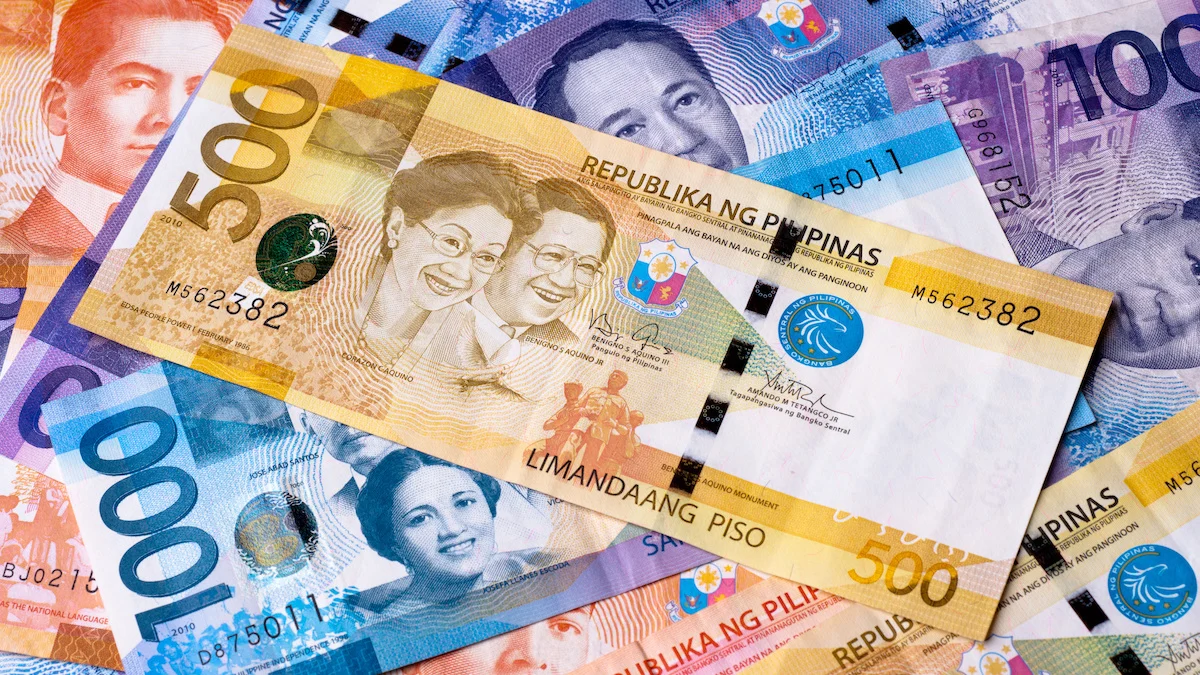
The Philippine Peso—locally known as Piso—is the official currency of the Philippines. It uses the code PHP and the symbol ₱. Each peso is made up of 100 centavos, which you might hear called ‘sentimos’ in Filipino.

Over the years, the peso has seen a lot—from Spanish coins to quirky WWII “Mickey Mouse Money.” Today, it’s issued by the Bangko Sentral ng Pilipinas and features everything from national heroes to iconic landmarks and native wildlife.
What to Know Before Sending Money to the Philippines

If you are sending money to the Philippines for the first time, it's important to know how the process works beyond just the exchange rate. Here are some key factors to consider to ensure a smooth, cost-effective transfer:

  • Ease of transfer: Transferring money to PHP is usually smooth on some reputable and famous platforms. You can use an exchange rate calculator to see such top platforms.
  • Speed and cost: Transfers can take anywhere from minutes to a couple of business days, depending on the provider. Costs vary—some services offer better rates but slower delivery, while others charge higher fees for instant transfers.
  • Roadblocks to watch for:
    • Hidden fees: Some providers may offer attractive exchange rates on the front, but deduct their fees in the backend. Always check the net amount your recipient will receive.
    • Exchange rate lock: All platforms don't lock the rates at the time of transfer. Rates may change by the time the recipient receives the money, unless you have used a service that allows you to lock the rate at the time of transfer.
    • Daily transfer limits: Some services have a limit on how much you can send in a day or in a transaction, especially for new users.

What Is the Philippines Currency Exchange Rate?

The USD to PHP exchange rate stood still at 2 PHP per USD from 1946 to 1962. Under the pegged system, the currency substantially depreciated. By 1966, it was being traded at 20 PHP per 1 USD. The black market exchange rate for the PH currency was higher than the official rate during this period.

After the New Central Bank Act in 1993, the Philippine Peso became a floating currency. This brought stability to the currency, and the black market also finally disappeared.

The Peso depreciated in the early 1990s to 28 PHP per USD. In the history of the USD to PHP exchange rate, the value of Ph currency depreciated to its lowest at 56.341 PHP per USD.

What Factors Affect the Currency Exchange Rates?

The fluctuating exchange rate between the Philippine Peso and the USD is due to complex economic factors. Since PHP is a floating currency, market forces determine its value. These include the Philippines' economic performance, interest rates set by the Bangko Sentral ng Pilipinas (BSP), inflation rates, and the country's trade balance. 

Political stability and investor confidence also play significant roles. When the Philippine economy is strong, with growth and low inflation, the PHP tends to appreciate. On the contrary, economic downturns, political instability, or high inflation can lead to depreciation. 

Global economic conditions, such as US interest rate changes or global market volatility, also impact the exchange rate. The supply and demand of each currency in the foreign exchange market, influenced by trade flows and investment activities, ultimately dictate the prevailing exchange rate.

Tips for Sending Money to the Philippines

The Philippine Peso is a floating currency—its value changes constantly based on the market’s demand and supply. As of now, 1 USD is trading at approximately 57 PHP, but the rates keep shifting.

To get the highest rate when exchanging or transferring money to the Philippines from the US, it is recommended to follow these steps:

  • Use online platforms to compare the rates offered by various remittance providers.
  • Compare the transfer fees and speed of the transfer.
  • Many providers impose hidden costs. Always check the final amount you will receive after the transfer.
  • Set alerts to get notified when the exchange rate hits your desired figure.

Stay updated on the PH currency exchange rates to know the best time to transfer money to get a higher amount. Use reliable services like Remitly, Wise, Xoom, or any of the other reputable money transfer companies on CompareRemit.

Summing Up the PH Currency

Understanding the Philippines currency is key to making smarter financial decisions—whether you are sending remittances, managing international expenses, or simply planning a trip. From knowing how exchange rates fluctuate to choosing the right time to transfer money, small moves can lead to big savings. With the right tools, you can avoid hidden fees and make every peso go further.

That's where CompareRemit comes in. Our platform helps you compare real-time exchange rates, fees, and transfer speeds across top remittance providers—all in one place. So you don’t just send money to the Philippines—you send it smarter.

Frequently Asked Questions (FAQs)

Q: Why is the Philippine Peso called Piso?

The term ‘Piso’ is Filipino for the Philippine Peso. It was introduced in the 1960s.

Q: Can I use USD in the Philippines?

While US dollars are accepted in some tourist areas, hotels, and major establishments, they aren’t widely used for everyday transactions. It’s best to carry Philippine pesos (PHP) for convenience, especially when shopping locally or traveling outside major cities.

Q: How can I get the best exchange rate when sending money to the Philippines?

To get the best rate, compare offers from multiple remittance services instead of sticking with just one provider. Tools like CompareRemit help you easily track real-time exchange rates, transfer fees, and delivery times so you can choose the most cost-effective option for your needs.

Q: What is the highest rate of USD to PHP in history?

The highest recorded exchange rate of USD to PHP was ₱59.21 per $1, reached on September 28, 2022. Over the past decade, the peso gradually weakened, from ₱40 in 2013 to over ₱50 by 2017, and ₱54.40 in 2018. Although the peso briefly strengthened to around ₱47.70 in 2021, it sharply declined again in 2022, hitting its all-time high before stabilizing around ₱55–₱56 in early 2023.

Q: What is the best time to exchange dollars for Philippine pesos?

There’s no single “perfect” time, but generally, exchange rates are more favorable on weekdays when the forex market is most active—especially between 12:00 to 15:00 GMT, when trading volume peaks. If you're converting USD to PHP, weekends sometimes offer a better USD rate due to lower currency flow. Keep an eye on real-time exchange rates and market trends to convert when the dollar is strongest.

 178968 views
Rate article:
(3.7)
 
 
Money Transfer FAQ's
Related Articles
what-is-fiat-currency
Fiat Currency: What It Is and How It Affects Your Money

Fiat currency, in simple terms, is the government-issued national currency. In the United States of America (U.S.A.), the dollar is the fiat currency. It is the legal tender, meaning it is used by American citizens for daily transactions and is required for paying debts and federal taxes. Unlike earlier times, modern fiat currency is not backed by any physical commodity, such as gold or silver. Instead, its value depends on supply and demand, as well as the stability and credibility of the government and its central bank that issues it.So yes, the dollar derives its value from public trust in the government and the Federal Reserve, as well as the stability of the American economy.However, the downside of fiat currency is that, since it is not tied to gold, silver, or any other commodity, its purchasing power erodes during periods of inflation. And, needless to say, fiat currency loses value when citizens lose faith in their government.Examples of Nations Losing Trust in Their Fiat CurrencyWhen public confidence in a currency collapses, the effects ripple through an entire economy. Here are real-world examples of countries facing that breakdown.1. Zimbabwe (Late 2000s)This Southeast African nation printed truckloads of money to cover government spending, which triggered hyperinflation. Prices doubled almost daily, and at one time inflation hit over 231 million percent. Citizens needed wheelbarrows of cash to buy just a loaf of bread. Eventually, the Zimbabweans abandoned the Zimbabwean dollar and switched to the U.S. dollar and other foreign currencies. They even turned to a barter system for their daily transactions.2. Venezuela (2016–2019)Years of economic mismanagement and dwindling oil revenue in this South American country led the government to print huge amounts of money, triggering inflation. Gradually, inflation spiraled into hyperinflation, wiping out savings as prices skyrocketed. Many Venezuelans turned to U.S. dollars, barter, or crypto just to survive.3. Argentina (Perpetually in Crisis, Most Recently 2018–2023)Argentina, again in South America, has long faced chronic inflation due to its debt crises and loss of confidence in government policies. Citizens often prefer U.S. dollars for savings, leading to a thriving black-market exchange rate. Persistent public distrust in their fiat currency continues to weaken the Argentine peso.Why Do Countries Even Use Fiat Currency?1. It Offers FlexibilityCentral banks adjust interest rates and manage the money supply through monetary policy. This flexibility is a major advantage of fiat currency and helps them respond to shifting economic conditions.For example, during the 2008 global financial crisis, the U.S. Federal Reserve slashed interest rates to near zero and injected liquidity into the banking system. This rapid response was only possible because fiat currency allows central banks to expand the money supply when needed.Similarly, during COVID-19, countries like the U.S., India, Japan, and the U.K. issued large stimulus packages and emergency relief funds by expanding their money supply, something possible only with a fiat currency and not possible under a gold-backed system.2. It Helps Manage InflationBecause the central banks can control the supply of money (fiat currency) and thus overall liquidity in the economy, they can fight inflation by tightening the money supply. For example, the European Central Bank raised interest rates aggressively in 2022 when Eurozone inflation hit record highs. This move helped stabilize prices.3. It Supports Modern Banking and Credit SystemsFiat currency forms the backbone of the modern banking system. It enables commercial lending, credit cards, mortgages and business loans, interbank transfers, and digital and electronic payments. For example, India’s massive digital payments ecosystem, especially UPI, works because the rupee exists as fiat currency that can be digitally created, stored, transferred, and settled in banking systems.Similarly, banks worldwide can issue loans by creating new deposits. This credit expansion would be extremely difficult under a commodity-backed currency.4. It Helps Stimulate or Slow the EconomyGovernments, through central banks, can lower the interest rates and thus increase the supply of money into the economy during times of recession. On the flip side, during economic booms when inflation is going through the roof, it can increase the interest rates to reduce credit and money supply in the economy and thus fight bouts of inflation.For example, Japan kept interest rates near zero for decades to stimulate growth and avoid deflation. This long-term strategy is viable because fiat currency allows flexible monetary control.How Does Fiat Money Work? 1. Government Issues the CurrencyThe government declares the national currency as legal tender. In the U.S., the Treasury prints physical money, while the Federal Reserve oversees the monetary system.2. No Commodity BackingModern fiat money is not backed by gold, silver, or any other physical commodity. A dollar cannot be exchanged for gold at a fixed rate.3. Its Value Comes From Trust and StabilityFiat money has no intrinsic value. Its worth depends on public confidence, government stability, economic performance, and inflation levels.4. Legal Tender Status Creates Built-In DemandDollars must be accepted for purchasing goods and services, paying debts, if any, and paying federal taxes. This requirement guarantees widespread use of the U.S. Dollar, the fiat currency of the U.S.A.5. Central Bank Controls the Money Supply Through Monetary PolicyThe Federal Reserve (U.S. central bank) guides liquidity in the financial system, meaning it can increase or decrease the amount of money in circulation. The Federal Reserve uses tools like adjusting interest rates, open-market operations, and controlling bank reserves. These tools help manage inflation, unemployment, economic growth, and recession recovery. How Can You Track Exchange Rates Smartly? If you send money abroad or deal with foreign currency, fluctuations in fiat exchange rates directly affect how much your family receives or how much your international transfers cost.This is where a platform like CompareRemit is incredibly useful. It lets you compare real-time exchange rates, transfer fees, and provider speeds in one place, helping you get the best value for your money instead of losing out to poor rates or hidden charges.Frequently Asked Questions About Fiat Currency (FAQs)Q: When did the U.S. stop using the gold standard?The United States fully abandoned the gold standard in 1971, when President Richard Nixon ended the convertibility of the dollar into gold. Since then, the U.S. dollar has functioned entirely as a fiat currency.Q: Does fiat money always lead to inflation?No. While fiat money can allow inflation if mismanaged, many countries maintain low and stable inflation for decades with responsible monetary policy. Inflation depends on economic conditions and central bank decisions, not simply the use of fiat money.Q: Is cryptocurrency considered fiat currency?No. Cryptocurrencies are not fiat currencies because they are not issued by governments and do not have legal-tender status. Their value comes from market demand, scarcity, and technology, not government backing.Q: Why do most countries no longer back money with gold?Gold-backed systems limit how much money an economy can create. Modern economies require flexibility for lending, digital payments, crisis response, and economic growth, making fiat systems more practical than commodity-backed ones.Q: Can a government run out of fiat money?A government that issues its own currency (like the U.S.) cannot “run out” in the literal sense. However, printing too much money can cause inflation or currency instability, so responsible monetary management is essential.Q: How does fiat currency affect interest rates?Because central banks control the money supply, they can adjust interest rates to influence borrowing, spending, and investment. Fiat currency gives central banks greater control over these economic levers.Q: Is fiat currency safer than commodity-backed money?Each system has pros and cons. Fiat currency offers flexibility, while commodity-backed money offers stability but less adaptability. Modern economies prioritize flexibility, which is why almost all countries use fiat currency today.Q: What protects the value of the U.S. dollar?The strength of the U.S. dollar comes from economic size, global confidence, its reserve currency status, the rule of law, and the credibility of the Federal Reserve—not from commodities.

the-best-way-to-convert-pkr-to-usd-today
The Best Way to Convert PKR to USD: Check Today's Rate

When managing your finances across borders, especially for family support or international business, understanding currency exchange is crucial. If you are looking to convert PKR to USD, you've come to the right place. Millions of individuals and small business owners are regularly seeking the best rates and most efficient services to convert their money. In this article, we'll help you find the best Pakistani rupee to US dollar exchange rate. We'll also guide you in converting PKR to USD, ensuring you get the most value for your money.Pakistani Rupee to Dollar Rate TodayThe exchange rate between the Pakistan rupee to USD is a dynamic figure, constantly shifting due to a variety of global and local economic factors. 1 PKR to USD represents how much of a dollar you can get for 1 PKR. Similarly, the currency rate of the Pakistani rupee to the USD shows how many Pakistani rupees are equivalent to 1 USD.As of now, 1 PKR is approximately 0.0035 USD. This means 1 USD is roughly 284.3 PKR. The fluctuating nature of exchange rates makes it important to check the most up-to-date Pakistani rupee to dollar rate before initiating any transfer.What Influences the PKR to USD Exchange Rate?So, why do exchange rates fluctuate? Read on to know the factors behind the change in the currency rate of the Pakistan rupee to the US dollar. Understanding this can help you pick the right time to convert PKR to USD and get a better value.Inflation: When prices rise quickly in Pakistan, the value of the rupee tends to fall. As a result, you get fewer USD in exchange for your rupees. Keeping an eye on inflation trends can help you decide when to send money.Interest rates: Interest rates set by the State Bank of Pakistan and the US Federal Reserve influence the strength of each currency. Higher interest rates often attract foreign investors. This increases demand for the local currency, which can make it stronger.Economic and political stability: If Pakistan’s economy is growing and the political situation is stable, the rupee tends to do better. But if there's uncertainty, such as high unemployment or unstable leadership, the rupee may weaken. This directly affects the currency rate of the Pakistani rupee to the US dollar.Trade balance: When Pakistan imports more goods from the US than it exports, there's more demand for US dollars in the market. This can lower the value of the rupee compared to the dollar.National debt: A country with high debt can seem risky to investors. If Pakistan's debt levels increase, it may cause the rupee to depreciate, making it more expensive to convert PKR to USD.Global events: Events like wars and natural disasters or big changes in government policies can shake up currency markets. These events often lead to sudden changes in the Pakistani rupee to US dollar rate.PKR to USD: History and Forecast 2025 The Pakistani Rupee to US Dollar conversion has seen a pattern of gradual depreciation over the years, although 2025 has shown signs of relative stability. Looking back, the Pakistani rupee to dollar rate today is slightly stronger than its 2025 high of ₨ 293.33 recorded in March, but weaker than its January low of ₨ 278.48. Overall, the 2025 average exchange rate is about ₨ 280.96, according to year-to-date data. These figures reflect only minor fluctuations in the currency rate of PKR to USD, suggesting a more controlled foreign exchange environment last year.MonthRange (₨ per $1)Consensus Avg.August281.3 – 292.8287.0September281.6 – 293.1287.3October280.4 – 291.9286.2Nov–Dec280.8 – 292.3286.5The Pakistani rupee to dollar exchange rate today is relatively steady, thanks to improved economic management, monetary controls, and some external financial support. However, the conversion of PKR to USD value may still be influenced by inflation, global oil prices, and domestic political developments.Overall, if you're planning to convert Pakistani rupees to US dollars in 2026, you're likely to experience relatively stable rates, especially in the ₨ 285–₨ 290 per USD range. How to Convert Pakistani Rs to US Dollars: Your OptionsWhen you need to convert Pakistani rupees to US dollars, you have several avenues available, each with its own advantages and disadvantages concerning exchange rates, fees, and transfer speed.Online money transfer servicesOnline money transfer services have become increasingly popular for their convenience, competitive rates, and lower fees compared to traditional banks. These platforms specialize in international remittances, often offering better Pakistan rupee to US dollar conversion rates.They generally offer better exchange rates and lower fees. Transfers are often faster, with many services providing same-day or next-day delivery. They are accessible 24/7 through websites or mobile apps. While typically cost-effective, fees can vary between providers and for different transfer amounts. It’s always wise to compare.BanksTraditional banks offer international money transfer services, which can be a familiar option for many. Banks are often seen as a secure and reliable option, especially for large transfers. If you or your recipient already has an account with the same bank, transfers might be quicker.Banks in Pakistan or banks in general often have higher transfer fees and may offer less competitive exchange rates, including a hidden markup on the interbank rate. This can mean your recipient receives fewer USD for the same amount of PKR. Transfer times can also be longer.Currency exchange bureausFor smaller, in-person conversions, currency exchange bureaus are an option. These are convenient for immediate cash conversions when traveling.Exchange rates at these bureaus can be less favorable than those offered by online services or banks, and they may charge additional commissions or fees. They are not ideal for sending money internationally to a recipient's bank account.Getting the Best Pakistani Rupee to US Dollar Exchange RateFinding the best Pakistani rupee to US dollar exchange rate can significantly impact the amount of US dollars your recipient receives. Here's how you can maximize your transfer:Compare exchange rates: Exchange rates fluctuate, and different providers offer different rates. The Pakistani rupee to dollar rate today from one provider may differ from that of another provider tomorrow. Use comparison platforms to see real-time rates from various providers side by side.Look beyond zero fees: Some money transfer services say they charge zero fees or no commission. It’s important to check the currency rate they are offering in such cases. Many a time, the service makes a profit by giving you a lower exchange rate. So even if you don’t see a fee, your recipient might still end up with less money.Understand the mid-market rate: It’s the halfway point between the buying and selling rates that banks use to trade with each other. Most money transfer services don’t use this exact rate; they add a markup. By knowing this rate, you can compare and see how much extra a provider is charging.Consider transfer fees: Beyond the exchange rate, transfer fees can eat into your money. Some providers have flat fees, while others charge a percentage of the transfer amount. For larger transfers, a percentage-based fee might be more expensive.Time your transfer: If you are not in a hurry, monitoring the Pakistani rupee to US dollar rate can help you send money when the rate is most favorable. Even small improvements in the exchange rate can make a difference for significant transfer amounts.Check for promotions: Many money transfer services offer promotional rates or reduced fees for first-time users or specific corridors. Keep an eye out for these deals.Your Next Step for Smart Money TransfersUnderstanding how to convert PKR to USD is just the first step. The real magic happens when you can effortlessly compare your options and secure the best deal. With fluctuating exchange rates and varying fees, comparing providers is essential to ensure more of your money reaches its destination.This is where CompareRemit comes in. Our platform empowers you to compare various remittance providers side by side, giving you real-time data on exchange rates, fees, and transfer speeds. Instead of manually checking multiple websites, you can find the most cost-effective and efficient way to send money.Start comparing now and experience how simple and rewarding international money transfers can be.Frequently Asked Questions (FAQs)Q: Why does the Pakistani Rs to US dollar conversion rate change?The conversion rate from Pakistani rupee to US dollar fluctuates due to factors such as inflation, global oil prices, political stability, trade balances, and interest rate differences between the US and Pakistan.Q: What has been the highest exchange rate for the Pakistani rupee ever?The highest exchange rate for the Pakistani Rupee (PKR) against the US dollar, which actually means the lowest value of the PKR, was in September 2023, when 1 USD equaled 307.75 PKR. Q: How can I get the most value when transferring PKR to USD?To get the best Pakistani rupee to US dollar rate today, monitor trends regularly and use rate comparison tools. Sending money when the PKR is strong or the USD is weak can also help maximize value.Q: Will the Pakistani rupee get stronger?The Pakistani rupee has shown periods of strengthening, notably in late 2025, due to factors like an extended IMF loan program, government crackdowns on currency smuggling, rising remittances, and improved foreign exchange reserves. However, its future strength depends on various factors.Q: What is the limit to convert PKR to USD?Limits to convert Pakistani Rs to US dollars depend on the specific money transfer service or bank you use and the relevant regulations in both countries.

dollar-to-php-exchange-rate-today
Dollar to PHP Rate Today for Remittances

In the Philippines, remittances are lifelines for millions of families. Every dollar sent helps cover essentials like household expenses, school fees, business needs, or unexpected emergencies. Understandably, then, even slight shifts in the exchange rate can make a significant difference for Overseas Filipino Workers (OFWs) and others sending money back home.In this comprehensive guide, we cover everything from the US dollar to the PHP peso exchange rate today, to why rates fluctuate, and how you can make the most of your remittances.US Dollar to PHP Peso Exchange Rate TodayThe US Dollar to PHP Peso exchange rate today is approximately PHP 55.85 per $1 USD. For the most accurate and up-to-date rates, please visit the Bangko Sentral ng Pilipinas (BSP) website.Why Don’t You Always Get the Rate You See?While the BSP’s official rate provides a good reference point, most remittance services and currency exchange platforms don’t offer that exact rate to consumers. Instead, they apply a markup. This means that the rate you get is slightly lower than the one you see.For instance, if the mid-market rate is PHP 56 per $1, a remittance provider might offer you only PHP 55.20 or even PHP 55, depending on their profit margins. Additionally, many also charge a separate transfer fee, which further reduces the amount your recipient ultimately receives.Understanding the Mid-Market RateThe mid-market rate, also known as the interbank rate, is the rate at which banks and financial institutions exchange currencies with one another. It's considered the "real" exchange rate, but it's not typically what consumers get.Here's where platforms like CompareRemit become incredibly useful. They show current dollar exchange to Philippine peso rates as well as transfer fees from multiple providers side by side. Viewing these together helps you choose the most cost-effective option for sending money to the Philippines.USD to PHP Exchange Rate History (2024)The year 2024 began with the US dollar trading at around PHP 55.80. Over the course of the year, the peso weakened, and the exchange rate peaked at PHP 59.435 on December 18, 2024. That’s roughly a 6% to 7% increase, highlighting how currency fluctuations can significantly impact remittances and import costs.How Are Things Looking in 2025?As of June 2025, the USD to PHP exchange rate stands at approximately PHP 55.68. The highest rate so far this year was PHP 59.009 on January 10, while the lowest was PHP 55.350 on May 25. This shows some volatility. But overall, the peso has regained some strength since the start of the year.USD to PHP Outlook: What to Expect Next?Forecasts for the USD to PHP exchange rate over the next year vary widely. Some analysts expect the peso to strengthen, potentially pushing the rate closer to PHP 48.86 by mid-2026. Others anticipate it hovering around PHP 58.69 by the end of 2029, pointing to long-term depreciation.Highest Dollar Exchange Rate to PesoThe highest dollar exchange rate to peso was recorded in December 2024, when the Philippine peso dropped to approximately 59–60 PHP per US dollar. This spike was driven by factors such as uncertainty around the US presidential election and interest rate policies from the US Federal Reserve. Additional factors included the Bangko Sentral ng Pilipinas’ interest rate cuts and rising inflation expectations in the Philippines. Global geopolitical tensions also boosted demand for the dollar, further weakening the peso.When is the Best Time to Send Money to the Philippines?In general, it's best to send money when the peso is weak against the dollar. This will give you a higher dollar-to-peso PHP exchange rate and allow your recipient to receive more pesos for every dollar you send. So, weakening of the peso works in favor of Filipinos working in the US.Remember, keeping an eye on these trends and using comparison platforms like CompareRemit can help you time your transfer smartly and maximize its value.Practical Tips to Get the Best Exchange Rate When Sending Money to the Philippines1. Compare money transfer service providersDon’t rely on a single provider every time. Use CompareRemit to evaluate different money transfer services. With it, you can instantly check:Real-time dollar to peso PHP exchange rate todayThe best transfer feesFastest transfer speedsCompareRemit even lets you compare transfer services in tabular format. Click on “FIND THE BEST RATES,” select the service, and choose compare.2. Look for a locked-in exchange rateSome providers allow you to lock in the exchange rate at the time of the transaction. This protects you from rate drops and ensures your recipient gets the expected amount, even if the transfer takes a few hours or days to complete.3. Time your transfers strategically The US Federal Reserve and geopolitical events influence interest rates. These include elections and conflicts, and can significantly affect the US dollar to PHP peso exchange rate. Use CompareRemit to monitor rates, as well as the best timing for your transfers. 4. Adjust your strategy for small vs. large transfersFor smaller amounts, aim for low or zero transfer fees. For larger transfers, prioritizing a competitive exchange rate is important, as it can help you save thousands of pesos.  5. Check for full creditSome platforms may offer zero fees but may deduct some amount from what you're sending. Confirm all charges beforehand so that your recipient gets the full credit. 6. Avoid weekend transfers Foreign exchange markets are closed on weekends. Unless it is very urgent, avoid sending any money during weekends.7. Choose the right payment methodPaying via bank transfer or Automated Clearing House (ACH) is often more cost-effective than using a credit or debit card, which may incur additional processing fees.  How to Use the CompareRemit Platform and App for Remittances?You can visit the CompareRemit website directly to find money transfer service providers and compare them on various fronts. If you prefer using your smartphone for easy access, download the CompareRemit app from the Google Play Store or the App Store. After setting up your profile: Go to the USD to PHP rate comparison page.Confirm USD as the sending currency and the Philippines as the receiving country.Enter the amount you wish to send.Click on "FIND THE BEST RATE".Instantly view multiple providers and compare their rates, transfer fees, transfer time, and final PHP received.Select the best option you find fit and click on "Learn More" to continue your transfer on the provider's website.Once you have done your due diligence and chosen a service provider on CompareRemit, you can proceed with the money transfer process. Here's how:Register an account with your selected service.Provide ID and address proof for verification.Add your preferred payment method.Enter your recipient’s details.Select how the money should be delivered (e.g., bank deposit or cash pickup).Enter the transfer amount and confirm the transaction.Make the payment using your preferred method.You’ll receive a confirmation once the transfer is complete.Send USD to PHP With ConfidenceAs you plan your next transfer to your recipients in the Philippines, consider the current dollar exchange rate to the Philippine peso and decide what factors are most important to you: speed, the most value for money, or the least amount of fees.Don’t forget to use the CompareRemit calculator to simplify your remittance process; get access to transparency and peace of mind for your hard-earned money.Frequently Asked Questions (FAQs)Q: How do I know if I am getting a good USD to PHP exchange rate when sending money?You can check the mid-market rate on Google or financial websites like XE or Bloomberg, then compare it to what your remittance service is offering. If the gap is significant, you might not be getting the best deal.Q: Is it better to send money through a bank or a money transfer service?Bank transfers are safe and secure, but can be slow and may offer less favorable exchange rates or higher fees. Money transfer services, on the other hand, often provide faster delivery, better rates, and more options, such as cash pickup or mobile wallet transfers. This makes them a more cost-effective choice for many senders.Q: What additional charges should I watch out for when transferring money internationally?Beyond the transfer fee, be aware of exchange rate markups, receiver-side bank fees, or service charges for specific payment methods, such as credit cards. Q: Is it better to send money directly to a bank account or for cash pickup in the Philippines?Bank account deposits are usually cheaper and more secure for recurring transfers or larger amounts. Cash pickups are useful when recipients lack access to a bank, need money urgently, or reside in rural areas. However, cash pickup services might charge more or offer slightly lower exchange rates.Q: Do remittances from the US to the Philippines get taxed?Generally, personal remittances sent to family members in the Philippines are exempt from tax. However, large transfers, business-related payments, or frequent high-value remittances may invite scrutiny and taxes under local or international laws.Q: What happens if the exchange rate drops after I initiate a transfer?If your remittance provider doesn't offer a locked-in rate, the amount your recipient gets may be lower if the exchange rate falls before the transfer is processed. Choose services that allow rate locking, which ensures the agreed-upon rate holds even if there are fluctuations during the transfer time.

Download the CompareRemit App
Personalize your CompareRemit experience with your preferred corridor and receive target exchange rate notifications, seamless transitions to partner apps, and real-time comparisons of top remittance providers at your fingertips.

Get Listed or Advertise

Download Our Free App

Try our faster, enhanced mobile app for a better experience

CompareRemit App