USD INR ₹ 94.90
GBP INR ₹ 127.50
CAD INR ₹ 66.52
Guides

Instarem Money Transfer: Review & Comprehensive Guide

Updated on August 01, 2023 10:26 am
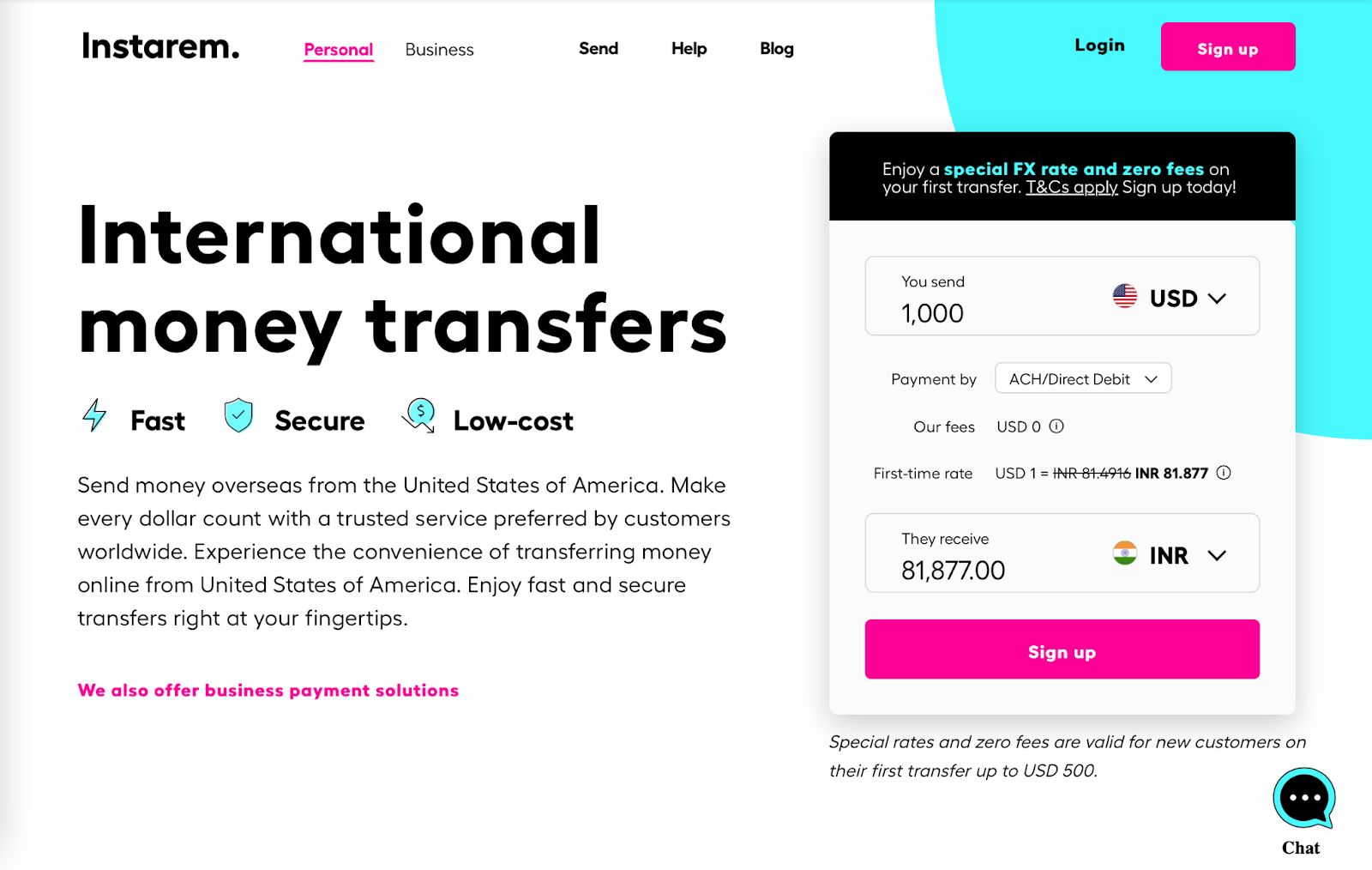
Instarem online screenshot

Instarem is an awarding winning remittance company that is focused on transforming the way people send money overseas by making the process easy and affordable for all. This leading money transfer service has revolutionized the way people send funds across borders with an easy-to-use platform, upfront low costs, and quick turnaround time. Instarem's focus on cost-effectiveness and reliability has earned it a loyal clientele and a stellar reputation within the industry. 

In this Instarem review, we will explore the main features, benefits and possible drawbacks of Instarem to help you make an informed choice when considering their platform as a solution for your international remittance requirements.

Let’s take a closer look at the Instarem remittance service and whether or not it is a preferred choice for sending money overseas online in this comprehensive Instarem money transfer review.
What is Instarem Money Transfer?

Instarem is an online, international money transfer service that allows users to send money overseas from the U.S. Instarem strongly believes in their model to use, “smarter, faster, and more reliable,” technology to, “make money simple for everyone.” They have offices located in 11 countries around the globe, and they serve over 60 countries. To send money with Instarem, you simply need to create an account and begin your money transfer process. 

Instarem also has a unique system of referral codes, where you can earn rewards by referring others and entering the referral code upon signing up to earn points for yourself and the new account holder you referred. 

Once you have secured your Instarem login, you can begin the money transfer process through Instarem.com or the Instarem app.
Countries supported by Instarem Money Transfer include: 

  • Australia
  • Bangladesh
  • Canada
  • China
  • Hong Kong
  • India
  • Japan
  • Malaysia
  • New Zealand
  • Pakistan
  • Philippines
  • Singapore
  • Sri Lanka
  • Kenya
  • France
  • Germany
  • Grece
  • Span
  • United Kingdom
  • Italy

You can find a comprehensive list of the countries Instarem serves by scrolling on the Instarem Send Money page.

How Much Does Instarem Money Transfer Cost?

Instarem calculates your transfer fee by adding a markup to the mid-market-rate. Calculating what the fee would look like for you will be tricky to do on your own. You can look up what the current mid-market-rate is on Google or use a currency converter. Once your Instarem login is secured, you can see in better detail how much your fees will be based on your individual transaction, since the total fee is determined from your transfer amount.

But what if you want to understand what your fee will look like before you commit to creating a login? Don’t worry, Instarem has a solution. Simply use their money transfer calculation tool, enter some basic information about your intended transfer, and get an estimation of what the transfer will cost and convert to. 

Instarem does not charge a fee for keeping your account. Creating and maintaining your account is free. 

How Much Money Can I Send Using Instarem?

Instarem’s minimum and maximum transfer amount varies based on which country you intend to transfer the money to. In a very clearly constructed chart, Instarem lays out all the details of the various limits, organized by country on their website. This chart also outlines the various payment methods available for each country and the maximum amount allowed for each payment method so you can decide for yourself, whichever option is best for you. 

How Long Does Instarem Take to Transfer Money?

While it is important for us to highlight that each transfer is unique and their transfer times are dependent on the amount and destination country, Instarem prides itself on its speedy money transfer. Because of its global banking network, Instarem aims to complete your transfer within 1-2 business days, a very speedy transfer time in comparison to many services in the market. 

Once you log in and begin your transfer process, Instarem will provide you with a more solidified deadline for your transfer. If you have the Instarem app, you will even be able to track your money transfer right at the click of your finger.  

Is Instarem Safe?

Instarem money transfer is licenced across all the countries it operates in and serves. It is licensed and regulated by financial authorities in different countries, including the Monetary Authority of Singapore (MAS), the Reserve Bank of India (RBI), Bank Negara Malaysia (BNM), Australian Transaction Reports and Analysis Centre (AUSTRAC), the Financial Conduct Authority (FCA) in the UK, and the Financial Crimes Enforcement Network (FinCEN) in the US.

Instarem employs the use of advanced encryption technology to protect your sensitive information and keep your transactions secure. 

How to Send Money With Instarem? 

Now for the biggest question you must have: how does Instarem work? 

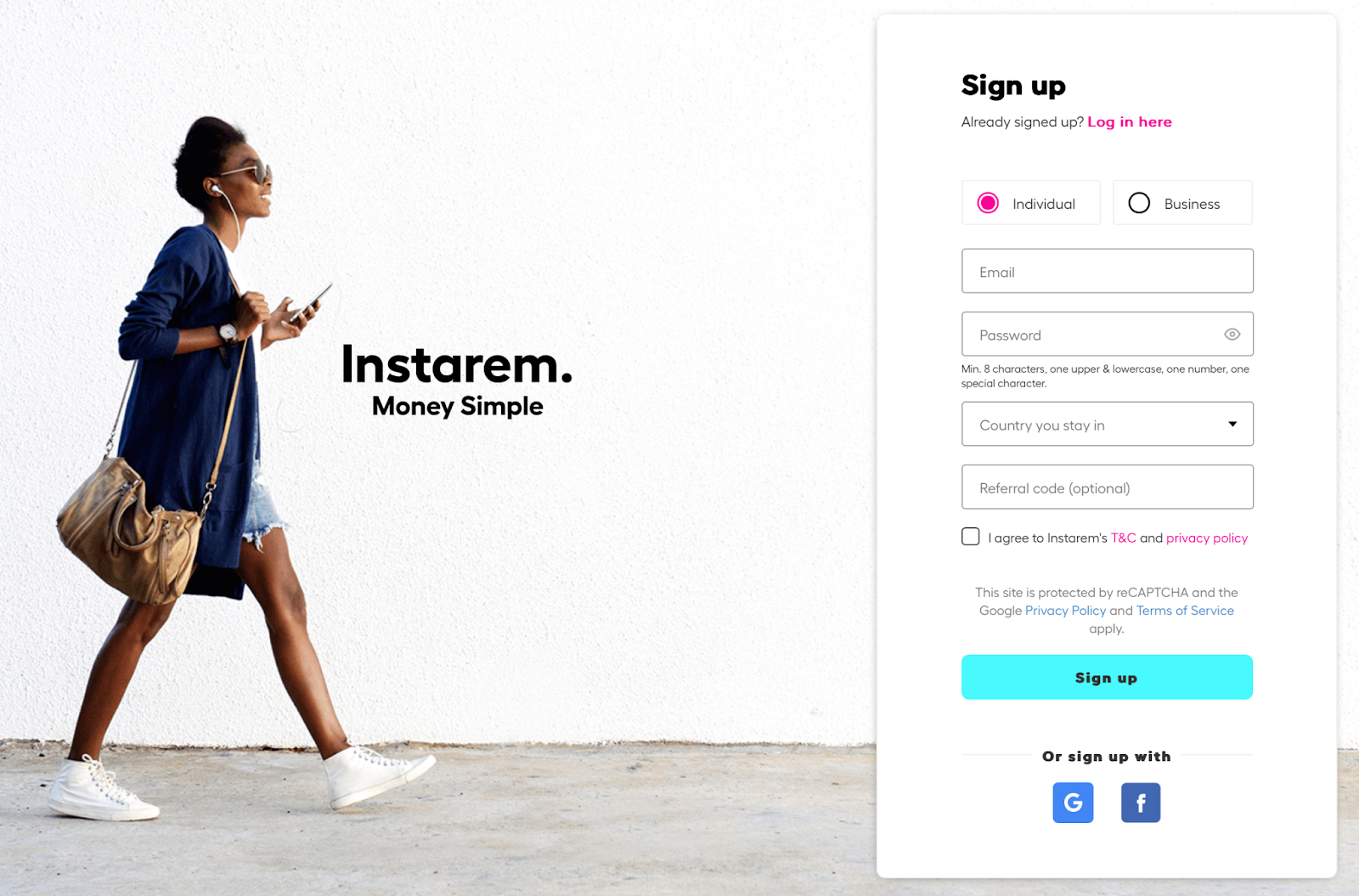
Sending money with Instarem requires you to first create an account. The account is free; you can register with your email and chosen password or simply sign in with your Google or Facebook account. 

Before you begin the official process, you can use the money transfer calculation tool to see a tentative estimation of the transfer cost and how much your recipient will receive.

While creating your account, you will be asked to provide the following information: 

  • Your Name
  • Email
  • Date of Birth (DOB)
  • ID - Proof of identification or valid driver’s license
  • Proof of Address 
  • Employment Status 

Once you have an account created, follow these detailed steps to set up your first remittance transaction.

  1. Choose your preferred payment method. This includes your debit card, credit card, bank transfer, and the other options available based on your location. 
  2. Indicate your transfer amount and select the currency - both the currency you are transferring and the currency your recipient will receive. After completing this step, you will see the exchange rate and estimated processing time. 
  3. Enter the recipient’s details, including their name and bank account number. Be ready to provide documentation and additional information if the country you are transferring to calls for it. 
  4. Select the recipient’s preferred method of receiving the money. You can select between electronic funds transfer or a cash pickup (only available in the Philippines) at a pre-authorized cash collection partner of your selection. 
  5. Review all the transfer details.
  6. Fund your transfer by making the payment from your chosen payment method from the earlier steps.
  7. Verify your international transfer by entering the verification code sent to the registered phone number or email. 
  8. Track your transfer using your Instarem account or mobile app.

After the transfer has been completed, you are eligible to receive points that can be applied to future money transfers.

How to Contact Instarem? 

Instarem has an extensive FAQ and Help Centre for their customers to have all of their questions answered. To receive more active help, you can chat with their 24/7 chatbot in the “Help” tab on the main page. 

You can also login to your Instarem account and send a query to ask more personalized questions. 

Finally, if you still have questions or feel that your query is still unanswered: 

You can send an email to [email protected]. Be sure to include the information below so Instarem can successfully assist you: 

  • Your Instarem Client ID,
  • The details pertaining to your concern
  • The Instarem Transaction ID (if any) related to your concern

Pros of Instarem Money Transfer

Based on our research of customer reviews and comparison to other remittance providers, the pros of the Instarem money transfer service are:

  • Competitive, bank-beating exchange rates. Your recipient will be getting more value for the money transferred than if you had done a wire transfer from a bank account.  
  • Quick transfer time. Many of the transfers will be completed in 1-2 business days. 
  • Serves 60 countries. 
  • Ability to cancel if your transfer is still pending. You can go into your account or app to see how far along your transfer is. If your transfer is still pending, you can cancel it and your money will be returned with no fee. 
  • Easy-to-navigate app that allows you to easily transfer and track your money simply and clearly. 
  • Convenient and quick to use. The simple usability of the transfer calculation tool gives you a surface-level idea of what your transfer will look like once you begin the process, further simplifying the process.
  • Your recipient can opt for a cash pick up if located in the Philippines. 
  • InstaPoint system allows you to earn points on every transfer and apply those points to the cost of future payments.

Cons of Instarem Money Transfer Service

Based on our research of customer reviews and comparison to other remittance providers, the cons of the Instarem service are:

  • The money transfer calculation tool is not as detailed as some other competitor’s tools.  
  • Exchange rate markups apply to your transfer. 
  • Cash deposits are not available in all countries, only the Philippines. 
  • Transfer times are longer than some competitors.

Instarem Money Transfer Service: Best Feature 

As mentioned before, Instarem has a very well-set-up and easy-to-understand point system, allowing customers to save money on their future transfers. Each transfer earns points, meaning you can start saving money right away. This stands out as a stellar feature, especially for those transferring money frequently. 

Instarem Money Transfer Service Alternatives

If you’re looking for an alternative to Instarem’s remittance service, here are some top remittance providers we recommend that offers low fees, excellent exchange rates, and are easy to use: 

Instarem Reviews

Need more assurance about Instarem? Let’s see what users of Instarem have to say. Sourced from multiple platforms, customer reviews of Instarem are: 

Instarem scores high on TrustPilot with a TrustScore of 4.5 out of 5. 

The transfer was easy, quick with absolutely no hassle. It was almost instantaneous! I had used the app for the transfer and the amount reached my India account in a matter of just a few minutes!” - Gaurav on TrustPilot

Instarem is a good money transfer provider, easy enough to use and placing a great deal of importance on security.” - Mehdi Punjwani on MoneyTransfers.com

Smooth, efficient and reliable. Used Instarem 3 times now and had no issues. Transfers get delivered within the day. The first transfer may take longer due to bank approving new payee. The other great thing is that the rate you agree to when you start the transaction doesn't change :)” - Jo Youssef on Google

Negative reviews pertain to identity verification, bank verification, transfer delays, and account suspension frustrations. 

Do We Recommend Instarem?

The simple process allows for Instarem to be a very convenient option for beginners, especially those looking for a service they can commit to and use multiple times. The InstaPoint system makes Instarem a great option to choose if you are looking to save money across multiple transfers.  

We invite you to compare remittance providers using CompareRemit’s comparison tool today to find the best rates, lowest fees, and fastest turnaround times for your specific destination and transfer amount.

 8335 views
Rate article:
(0.0)
 
 
Money Transfer FAQ's
Related Articles
what-is-fiat-currency
Fiat Currency: What It Is and How It Affects Your Money

Fiat currency, in simple terms, is the government-issued national currency. In the United States of America (U.S.A.), the dollar is the fiat currency. It is the legal tender, meaning it is used by American citizens for daily transactions and is required for paying debts and federal taxes. Unlike earlier times, modern fiat currency is not backed by any physical commodity, such as gold or silver. Instead, its value depends on supply and demand, as well as the stability and credibility of the government and its central bank that issues it.So yes, the dollar derives its value from public trust in the government and the Federal Reserve, as well as the stability of the American economy.However, the downside of fiat currency is that, since it is not tied to gold, silver, or any other commodity, its purchasing power erodes during periods of inflation. And, needless to say, fiat currency loses value when citizens lose faith in their government.Examples of Nations Losing Trust in Their Fiat CurrencyWhen public confidence in a currency collapses, the effects ripple through an entire economy. Here are real-world examples of countries facing that breakdown.1. Zimbabwe (Late 2000s)This Southeast African nation printed truckloads of money to cover government spending, which triggered hyperinflation. Prices doubled almost daily, and at one time inflation hit over 231 million percent. Citizens needed wheelbarrows of cash to buy just a loaf of bread. Eventually, the Zimbabweans abandoned the Zimbabwean dollar and switched to the U.S. dollar and other foreign currencies. They even turned to a barter system for their daily transactions.2. Venezuela (2016–2019)Years of economic mismanagement and dwindling oil revenue in this South American country led the government to print huge amounts of money, triggering inflation. Gradually, inflation spiraled into hyperinflation, wiping out savings as prices skyrocketed. Many Venezuelans turned to U.S. dollars, barter, or crypto just to survive.3. Argentina (Perpetually in Crisis, Most Recently 2018–2023)Argentina, again in South America, has long faced chronic inflation due to its debt crises and loss of confidence in government policies. Citizens often prefer U.S. dollars for savings, leading to a thriving black-market exchange rate. Persistent public distrust in their fiat currency continues to weaken the Argentine peso.Why Do Countries Even Use Fiat Currency?1. It Offers FlexibilityCentral banks adjust interest rates and manage the money supply through monetary policy. This flexibility is a major advantage of fiat currency and helps them respond to shifting economic conditions.For example, during the 2008 global financial crisis, the U.S. Federal Reserve slashed interest rates to near zero and injected liquidity into the banking system. This rapid response was only possible because fiat currency allows central banks to expand the money supply when needed.Similarly, during COVID-19, countries like the U.S., India, Japan, and the U.K. issued large stimulus packages and emergency relief funds by expanding their money supply, something possible only with a fiat currency and not possible under a gold-backed system.2. It Helps Manage InflationBecause the central banks can control the supply of money (fiat currency) and thus overall liquidity in the economy, they can fight inflation by tightening the money supply. For example, the European Central Bank raised interest rates aggressively in 2022 when Eurozone inflation hit record highs. This move helped stabilize prices.3. It Supports Modern Banking and Credit SystemsFiat currency forms the backbone of the modern banking system. It enables commercial lending, credit cards, mortgages and business loans, interbank transfers, and digital and electronic payments. For example, India’s massive digital payments ecosystem, especially UPI, works because the rupee exists as fiat currency that can be digitally created, stored, transferred, and settled in banking systems.Similarly, banks worldwide can issue loans by creating new deposits. This credit expansion would be extremely difficult under a commodity-backed currency.4. It Helps Stimulate or Slow the EconomyGovernments, through central banks, can lower the interest rates and thus increase the supply of money into the economy during times of recession. On the flip side, during economic booms when inflation is going through the roof, it can increase the interest rates to reduce credit and money supply in the economy and thus fight bouts of inflation.For example, Japan kept interest rates near zero for decades to stimulate growth and avoid deflation. This long-term strategy is viable because fiat currency allows flexible monetary control.How Does Fiat Money Work? 1. Government Issues the CurrencyThe government declares the national currency as legal tender. In the U.S., the Treasury prints physical money, while the Federal Reserve oversees the monetary system.2. No Commodity BackingModern fiat money is not backed by gold, silver, or any other physical commodity. A dollar cannot be exchanged for gold at a fixed rate.3. Its Value Comes From Trust and StabilityFiat money has no intrinsic value. Its worth depends on public confidence, government stability, economic performance, and inflation levels.4. Legal Tender Status Creates Built-In DemandDollars must be accepted for purchasing goods and services, paying debts, if any, and paying federal taxes. This requirement guarantees widespread use of the U.S. Dollar, the fiat currency of the U.S.A.5. Central Bank Controls the Money Supply Through Monetary PolicyThe Federal Reserve (U.S. central bank) guides liquidity in the financial system, meaning it can increase or decrease the amount of money in circulation. The Federal Reserve uses tools like adjusting interest rates, open-market operations, and controlling bank reserves. These tools help manage inflation, unemployment, economic growth, and recession recovery. How Can You Track Exchange Rates Smartly? If you send money abroad or deal with foreign currency, fluctuations in fiat exchange rates directly affect how much your family receives or how much your international transfers cost.This is where a platform like CompareRemit is incredibly useful. It lets you compare real-time exchange rates, transfer fees, and provider speeds in one place, helping you get the best value for your money instead of losing out to poor rates or hidden charges.Frequently Asked Questions About Fiat Currency (FAQs)Q: When did the U.S. stop using the gold standard?The United States fully abandoned the gold standard in 1971, when President Richard Nixon ended the convertibility of the dollar into gold. Since then, the U.S. dollar has functioned entirely as a fiat currency.Q: Does fiat money always lead to inflation?No. While fiat money can allow inflation if mismanaged, many countries maintain low and stable inflation for decades with responsible monetary policy. Inflation depends on economic conditions and central bank decisions, not simply the use of fiat money.Q: Is cryptocurrency considered fiat currency?No. Cryptocurrencies are not fiat currencies because they are not issued by governments and do not have legal-tender status. Their value comes from market demand, scarcity, and technology, not government backing.Q: Why do most countries no longer back money with gold?Gold-backed systems limit how much money an economy can create. Modern economies require flexibility for lending, digital payments, crisis response, and economic growth, making fiat systems more practical than commodity-backed ones.Q: Can a government run out of fiat money?A government that issues its own currency (like the U.S.) cannot “run out” in the literal sense. However, printing too much money can cause inflation or currency instability, so responsible monetary management is essential.Q: How does fiat currency affect interest rates?Because central banks control the money supply, they can adjust interest rates to influence borrowing, spending, and investment. Fiat currency gives central banks greater control over these economic levers.Q: Is fiat currency safer than commodity-backed money?Each system has pros and cons. Fiat currency offers flexibility, while commodity-backed money offers stability but less adaptability. Modern economies prioritize flexibility, which is why almost all countries use fiat currency today.Q: What protects the value of the U.S. dollar?The strength of the U.S. dollar comes from economic size, global confidence, its reserve currency status, the rule of law, and the credibility of the Federal Reserve—not from commodities.

dollar-to-php-exchange-rate-today
Dollar to PHP Rate Today for Remittances

In the Philippines, remittances are lifelines for millions of families. Every dollar sent helps cover essentials like household expenses, school fees, business needs, or unexpected emergencies. Understandably, then, even slight shifts in the exchange rate can make a significant difference for Overseas Filipino Workers (OFWs) and others sending money back home.In this comprehensive guide, we cover everything from the US dollar to the PHP peso exchange rate today, to why rates fluctuate, and how you can make the most of your remittances.US Dollar to PHP Peso Exchange Rate TodayThe US Dollar to PHP Peso exchange rate today is approximately PHP 55.85 per $1 USD. For the most accurate and up-to-date rates, please visit the Bangko Sentral ng Pilipinas (BSP) website.Why Don’t You Always Get the Rate You See?While the BSP’s official rate provides a good reference point, most remittance services and currency exchange platforms don’t offer that exact rate to consumers. Instead, they apply a markup. This means that the rate you get is slightly lower than the one you see.For instance, if the mid-market rate is PHP 56 per $1, a remittance provider might offer you only PHP 55.20 or even PHP 55, depending on their profit margins. Additionally, many also charge a separate transfer fee, which further reduces the amount your recipient ultimately receives.Understanding the Mid-Market RateThe mid-market rate, also known as the interbank rate, is the rate at which banks and financial institutions exchange currencies with one another. It's considered the "real" exchange rate, but it's not typically what consumers get.Here's where platforms like CompareRemit become incredibly useful. They show current dollar exchange to Philippine peso rates as well as transfer fees from multiple providers side by side. Viewing these together helps you choose the most cost-effective option for sending money to the Philippines.USD to PHP Exchange Rate History (2024)The year 2024 began with the US dollar trading at around PHP 55.80. Over the course of the year, the peso weakened, and the exchange rate peaked at PHP 59.435 on December 18, 2024. That’s roughly a 6% to 7% increase, highlighting how currency fluctuations can significantly impact remittances and import costs.How Are Things Looking in 2025?As of June 2025, the USD to PHP exchange rate stands at approximately PHP 55.68. The highest rate so far this year was PHP 59.009 on January 10, while the lowest was PHP 55.350 on May 25. This shows some volatility. But overall, the peso has regained some strength since the start of the year.USD to PHP Outlook: What to Expect Next?Forecasts for the USD to PHP exchange rate over the next year vary widely. Some analysts expect the peso to strengthen, potentially pushing the rate closer to PHP 48.86 by mid-2026. Others anticipate it hovering around PHP 58.69 by the end of 2029, pointing to long-term depreciation.Highest Dollar Exchange Rate to PesoThe highest dollar exchange rate to peso was recorded in December 2024, when the Philippine peso dropped to approximately 59–60 PHP per US dollar. This spike was driven by factors such as uncertainty around the US presidential election and interest rate policies from the US Federal Reserve. Additional factors included the Bangko Sentral ng Pilipinas’ interest rate cuts and rising inflation expectations in the Philippines. Global geopolitical tensions also boosted demand for the dollar, further weakening the peso.When is the Best Time to Send Money to the Philippines?In general, it's best to send money when the peso is weak against the dollar. This will give you a higher dollar-to-peso PHP exchange rate and allow your recipient to receive more pesos for every dollar you send. So, weakening of the peso works in favor of Filipinos working in the US.Remember, keeping an eye on these trends and using comparison platforms like CompareRemit can help you time your transfer smartly and maximize its value.Practical Tips to Get the Best Exchange Rate When Sending Money to the Philippines1. Compare money transfer service providersDon’t rely on a single provider every time. Use CompareRemit to evaluate different money transfer services. With it, you can instantly check:Real-time dollar to peso PHP exchange rate todayThe best transfer feesFastest transfer speedsCompareRemit even lets you compare transfer services in tabular format. Click on “FIND THE BEST RATES,” select the service, and choose compare.2. Look for a locked-in exchange rateSome providers allow you to lock in the exchange rate at the time of the transaction. This protects you from rate drops and ensures your recipient gets the expected amount, even if the transfer takes a few hours or days to complete.3. Time your transfers strategically The US Federal Reserve and geopolitical events influence interest rates. These include elections and conflicts, and can significantly affect the US dollar to PHP peso exchange rate. Use CompareRemit to monitor rates, as well as the best timing for your transfers. 4. Adjust your strategy for small vs. large transfersFor smaller amounts, aim for low or zero transfer fees. For larger transfers, prioritizing a competitive exchange rate is important, as it can help you save thousands of pesos.  5. Check for full creditSome platforms may offer zero fees but may deduct some amount from what you're sending. Confirm all charges beforehand so that your recipient gets the full credit. 6. Avoid weekend transfers Foreign exchange markets are closed on weekends. Unless it is very urgent, avoid sending any money during weekends.7. Choose the right payment methodPaying via bank transfer or Automated Clearing House (ACH) is often more cost-effective than using a credit or debit card, which may incur additional processing fees.  How to Use the CompareRemit Platform and App for Remittances?You can visit the CompareRemit website directly to find money transfer service providers and compare them on various fronts. If you prefer using your smartphone for easy access, download the CompareRemit app from the Google Play Store or the App Store. After setting up your profile: Go to the USD to PHP rate comparison page.Confirm USD as the sending currency and the Philippines as the receiving country.Enter the amount you wish to send.Click on "FIND THE BEST RATE".Instantly view multiple providers and compare their rates, transfer fees, transfer time, and final PHP received.Select the best option you find fit and click on "Learn More" to continue your transfer on the provider's website.Once you have done your due diligence and chosen a service provider on CompareRemit, you can proceed with the money transfer process. Here's how:Register an account with your selected service.Provide ID and address proof for verification.Add your preferred payment method.Enter your recipient’s details.Select how the money should be delivered (e.g., bank deposit or cash pickup).Enter the transfer amount and confirm the transaction.Make the payment using your preferred method.You’ll receive a confirmation once the transfer is complete.Send USD to PHP With ConfidenceAs you plan your next transfer to your recipients in the Philippines, consider the current dollar exchange rate to the Philippine peso and decide what factors are most important to you: speed, the most value for money, or the least amount of fees.Don’t forget to use the CompareRemit calculator to simplify your remittance process; get access to transparency and peace of mind for your hard-earned money.Frequently Asked Questions (FAQs)Q: How do I know if I am getting a good USD to PHP exchange rate when sending money?You can check the mid-market rate on Google or financial websites like XE or Bloomberg, then compare it to what your remittance service is offering. If the gap is significant, you might not be getting the best deal.Q: Is it better to send money through a bank or a money transfer service?Bank transfers are safe and secure, but can be slow and may offer less favorable exchange rates or higher fees. Money transfer services, on the other hand, often provide faster delivery, better rates, and more options, such as cash pickup or mobile wallet transfers. This makes them a more cost-effective choice for many senders.Q: What additional charges should I watch out for when transferring money internationally?Beyond the transfer fee, be aware of exchange rate markups, receiver-side bank fees, or service charges for specific payment methods, such as credit cards. Q: Is it better to send money directly to a bank account or for cash pickup in the Philippines?Bank account deposits are usually cheaper and more secure for recurring transfers or larger amounts. Cash pickups are useful when recipients lack access to a bank, need money urgently, or reside in rural areas. However, cash pickup services might charge more or offer slightly lower exchange rates.Q: Do remittances from the US to the Philippines get taxed?Generally, personal remittances sent to family members in the Philippines are exempt from tax. However, large transfers, business-related payments, or frequent high-value remittances may invite scrutiny and taxes under local or international laws.Q: What happens if the exchange rate drops after I initiate a transfer?If your remittance provider doesn't offer a locked-in rate, the amount your recipient gets may be lower if the exchange rate falls before the transfer is processed. Choose services that allow rate locking, which ensures the agreed-upon rate holds even if there are fluctuations during the transfer time.

money being exchanged into foreign currency
Best Ways to Skip Foreign Transaction Fees Abroad

Using your card overseas might feel convenient at first, but extra charges can quickly add up. Each international purchase can slowly eat into your budget due to foreign transaction fees. These charges, usually between 2.5% and 3.5%, may appear small, but they can take a noticeable toll on your spending when traveling abroad.For instance, if you use your card for a $1,000 purchase abroad, you could unknowingly pay up to $35 more. Do that a few times, and the extra costs can add up fast.This is why it helps to plan ahead. Knowing how foreign transaction fees work and where they come from can help you avoid them and better manage your travel spending. Up next, we’ll share seven practical ways to keep these charges away.7 Ways to Avoid Foreign Transaction FeesForeign transaction fees are extra charges applied when you buy something outside your country or use a different currency. Your card provider usually adds these fees when the payment goes through an international network or involves converting currencies.Here are some of the most effective ways to reduce or remove these unnecessary charges:1. Skip currency exchange at airports or hotelsWhile it may seem convenient, exchanging currency at airports or hotels usually means getting poor rates. These counters often include high markups, which reduce the actual value you receive.For instance, if the market rate is 1.10 units of foreign currency for 1 unit of your currency, airport rates may drop to 1.05 or lower. That small gap can cost you more during bigger exchanges.Instead, consider using trusted forex outlets in the city or authorized digital apps that allow you to lock in better rates before you travel. A little research, along with tools like CompareRemit, can help you track better rates in advance.2. Exchange currency in major cities rather than tourist areasAfter deciding against exchanging money at airports or hotels, the next wise step is choosing the right location. Where you exchange your currency matters more than most people think.Tourist-centric areas and remote spots usually have fewer exchange options, resulting in less competition and higher rates. In contrast, big cities often have more authorized money exchangers, offering better rates and clearer pricing.Before traveling, take a few minutes to look up and compare rates in the city you’re visiting. This simple step can help you hold on to more of your money.3. Make smaller, strategic ATM withdrawalsOnce your currency exchange is settled, it’s smart to think about how you’ll access cash during your trip. Using ATMs overseas can be convenient, but only when approached with care. Many foreign ATMs charge both a flat fee and a percentage-based currency conversion cost.To get better value, try withdrawing slightly larger amounts less often, instead of making several small withdrawals. Choose ATMs linked to trusted networks like Cirrus or Visa Plus, and use machines located inside bank branches for added security and fewer hidden charges.If you ever need to send money back home quickly, consider digital transfer methods to save both time and extra costs.4. Opt for credit cards with low or no foreign transaction feesWhile ATMs are great for managing cash, your card expenses need equal attention. Many credit cards quietly charge foreign transaction fees each time you spend abroad. Over the course of a trip, those small charges can quickly add up to a substantial sum.A smarter move is to opt for a credit card that includes travel Insurance for international use. Several providers, and even some banks, now offer cards with zero or low forex markup. Many of these come with added travel perks like built-in travel insurance, airport lounge access, and even interest-free cash withdrawals.For regular travelers, such cards offer more than just ease of use. They help you save money and improve your travel experience. Taking time to explore card options before your next trip can go a long way in avoiding those extra costs.5. Carry cash or use prepaid forex or travel cardsCarrying some local currency before your trip gives you better control over exchange rates and helps you avoid expensive last-minute exchanges. Cash is also useful in places where cards aren’t widely accepted.To protect your money, consider splitting it into smaller amounts and storing it in different places, such as your wallet, a money belt, or a hotel locker. This lowers the risk of losing everything at once.Alternatively, prepaid travel cards offer a convenient middle ground. You can load them with foreign currency at fixed rates ahead of time and use them just like debit cards abroad. Choosing a prepaid card with no foreign transaction fees can help you save even more by avoiding extra charges with every swipe. Still, be sure to check for hidden charges, like inactivity or ATM fees, and compare them with credit card fees to choose what suits you best.6. Buy foreign currency from your bank before you travelBanks usually offer better exchange rates than airport kiosks or hotels. Getting your foreign currency early from your bank is often a smart and cost-effective option. You can do this through internet banking, mobile apps, or by visiting a nearby branch. Since the process can take a few days, it’s best to plan if you have travel dates confirmed.Understanding how international currencies work and how rates shift can be useful when deciding when to exchange. This helps you avoid last-minute issues with poor rates. To easily check and compare rates before buying, tools like CompareRemit’s currency comparison can guide you in making clear and confident choices.7. Skip traveler’s checks as they’re largely obsoleteTraveler’s checks were once a reliable way to carry money overseas, but they’re now rarely used. Most places no longer accept them, and cashing them can be slow and inconvenient. They often come with extra fees and don’t offer the flexibility of modern tools.Today, better options include multi-currency cards, digital wallets, and credit cards with minimal or no foreign transaction fees. Unless you’re going somewhere extremely remote where they’re still useful, it’s better to avoid traveler’s checks altogether.Bonus Tip: Best Debit Card with No Foreign Transaction Fees for Global UseCredit cards are often used for travel, but many people choose not to rely on them abroad, which is completely understandable. Several banks now offer the best debit cards with no foreign transaction fees, specifically designed for international use. These cards let you shop and withdraw cash overseas without unexpected fees, making them a smart choice for budget-minded travelers.  Key features to consider when picking a card are:Membership in international ATM networksNo foreign exchange markupLive currency conversion ratesSome cards even come with added perks like travel insurance or emergency card replacement, helping you travel smarter without relying solely on credit. Apart from debit and credit cards, you can also explore some reliable apps for international money transfers to send money abroad safely and efficiently when needed.Keep More of Your Money While Exploring the WorldTravel should be about new experiences and making memories, not worrying about hidden fees nibbling away at your budget. With a little foresight and a better understanding of how currency exchange works, you can travel more confidently and spend without those nagging extra charges.Each step adds up to big savings, such as choosing a zero-forex-markup card, avoiding airport kiosks, or comparing exchange rates before you go. Platforms like CompareRemit make it easier to spot the best rates and smarter ways to send or spend money overseas. So before your next trip, plan meticulously, and let your finances travel as smartly as you do.Frequently Asked Questions (FAQs)Q: Do all banks charge foreign transaction fees by default?Many traditional banks still charge foreign transaction fees, but not all. Some newer online banks and fintech services offer cards and accounts meant for global use, which often come with zero forex markup or no foreign fees.Q: Are mobile wallets like Apple Pay or Google Pay free of foreign transaction fees?The fees depend on the card connected to the wallet. Mobile wallets themselves don’t charge extra, but if your linked debit or credit card includes foreign transaction fees, those charges will still apply when used abroad or in a different currency.Q: Do travel insurance plans cover losses from foreign transaction fees?Most travel insurance policies do not cover foreign transaction fees. These plans typically handle medical emergencies, missed trips, and baggage issues. Banking fees like these are not part of their coverage.Q: Are there any extra charges in prepaid travel cards?Some prepaid travel cards may include additional charges, such as reload fees, ATM withdrawal costs, inactivity penalties, or currency conversion charges, when used outside the loaded currency. Always review the fee structure before choosing.Q: How do foreign exchange rates fluctuate during travel?Exchange rates shift daily due to global market conditions, supply-demand balance, and central bank actions. Tools like XE or CompareRemit can help track these changes and guide currency conversion at the right time.

Download the CompareRemit App
Personalize your CompareRemit experience with your preferred corridor and receive target exchange rate notifications, seamless transitions to partner apps, and real-time comparisons of top remittance providers at your fingertips.

Get Listed or Advertise

Download Our Free App

Try our faster, enhanced mobile app for a better experience

CompareRemit App