USD INR ₹ 94.58
GBP INR ₹ 124.71
CAD INR ₹ 65.20
Guides

Paysend Money Transfer: Review & Comprehensive Guide

Updated on October 17, 2023 01:24 am
Paysend

Money transfers aren’t always a simple process. Money transfer services have become an integral part of our lives, offering convenience and efficiency. But it can be tricky to find the right service for you. Paysend, a prominent player in the money transfer industry, has gained widespread attention for its user-friendly interface, competitive rates, and secure transactions. This comprehensive review and guide will delve into the features, benefits, and step-by-step process of using Paysend for your money transfer needs. 

What is Paysend Money Transfer?

Paysend is a global money transfer platform that enables users to send money to over 70 countries worldwide. With a focus on simplicity and speed, Paysend aims to make international money transfers hassle-free for individuals and businesses alike. Whether you need to support family members overseas, pay for services, or conduct business transactions, Paysend offers a convenient solution.

Paysend proudly allows customers to transfer money to over 170 countries. 

Countries serviced by Paysend include: 

  • Australia
  • Bangladesh
  • China
  • Egypt 
  • France 
  • Germany 
  • Greece 
  • Hong Kong 
  • India 
  • Italy 
  • Japan
  • Mexico
  • Morocco
  • Nepal 
  • New Zealand 
  • Pakistan 
  • Philippines
  • Qatar
  • Singapore
  • Spain 
  • Sri Lanka 
  • Switzerland 
  • Turkey
  • UAE
  • United Kingdom
  • Vietnam
  • And More. . . 

To view a complete list of countries that Paysend serves, navigate to the home page. There you will find the money transfer calculation tool. Select the drop down menu for the receiving country and you will be shown all the countries you can send money to! Another way to check the complete list is to scroll down on the home page and view the large list of countries they allow remittances to. 

How Much Does Paysend Money Transfer Cost? 

Paysend charges a flat fee for their transfers. For every transfer, Paysend displays the currency exchange rate, transfer fee and receivable amount before you make the transfer. This can either be accessed once you secure your Paysend login and initiate the transfer or it can be seen by filling out the money transfer calculation tool. 

The Paysend fee is 2 USD for each transfer. 

How Much Money Can I Send Using Paysend? 

Paysend’s limits for transfers from the United States are based on a tier system. 

Tier 1 is the basic tier. You will automatically be in this tier when you create your login. The limits for Tier 1 are listed below: 
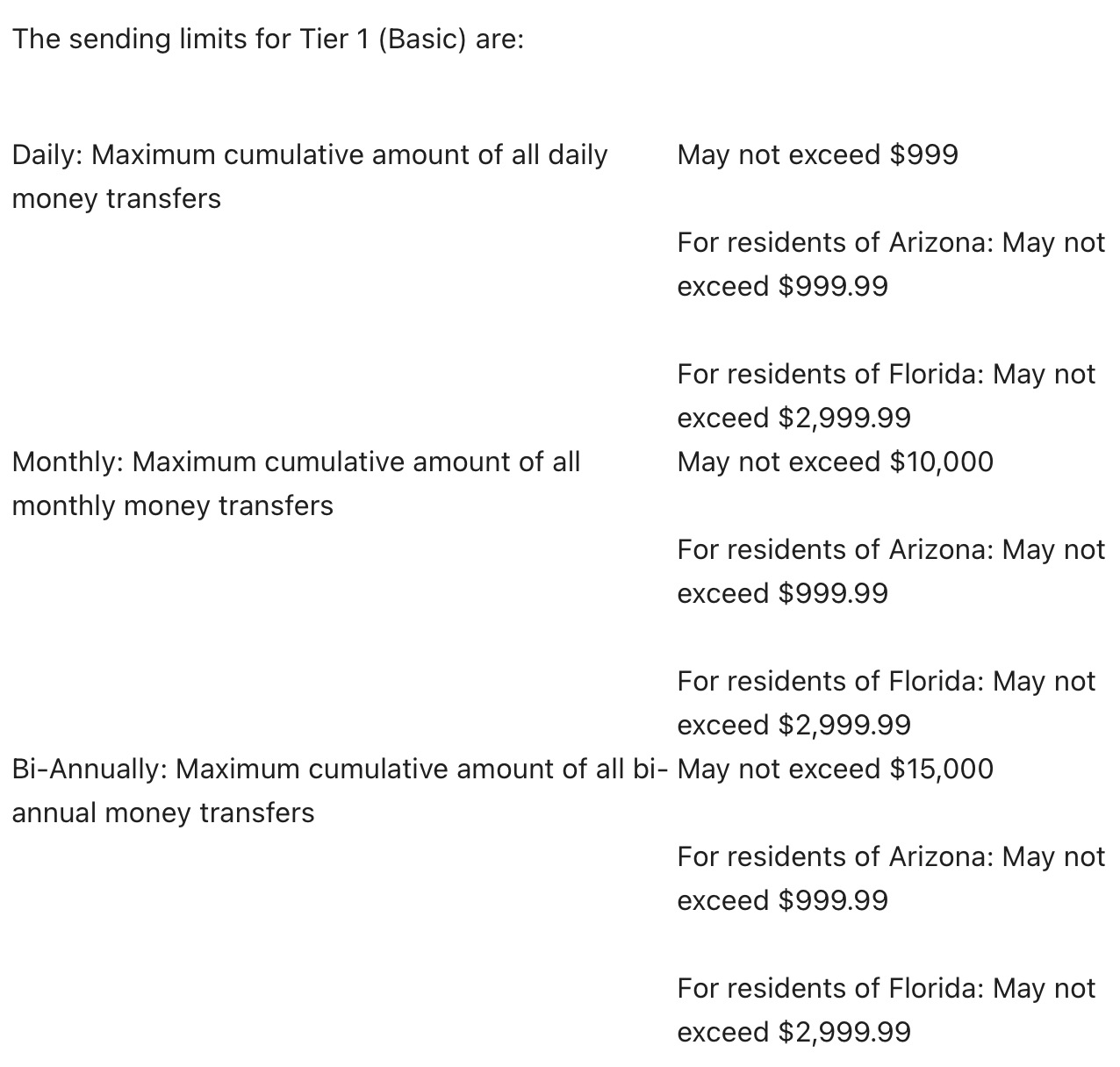
To qualify for Paysend’s Tier 2 (Advance) sending limits, you will need to successfully verify your SSN/ITIN number and personal data. 

To qualify for Paysend’s Tier 3 (Ultimate) sending limits, you will need to successfully verify the source of income. 

Here are some of the identity verification items that Paysend may ask from you: 

  • Full name
  • Phone number in the international format
  • Address
  • Date of birth
  • And/or other documents to confirm your identity. 

How Long Does Paysend Take to Send Money? 

The speed of your transfer depends on various factors: the provider’s processing time, the recipient's bank efficiency, destination procedures, paperwork, payment methods, and even the time of day you initiate the transfer.

Accessible 24/7 from your smartphone or laptop, Paysend ensures your money arrives within minutes, sometimes even seconds. No queues, no waiting – just swift, hassle-free transfers. 

To accelerate your transfers, opt for a provider that checks these boxes:

  • A simple, user-friendly transfer platform
  • Swift processing and settling times
  • 24/7 availability
  • A vast network of global banking partners
  • Extensive global reach, covering numerous countries

Your funds usually arrive within minutes, sometimes even seconds, while the slowest cases might take up to three days due to the recipient's bank. 

Is Paysend Safe? 

Yes, Paysend takes significant measures to ensure the safety and security of its users' transactions. The company employs robust encryption and security protocols to safeguard sensitive data, including personal and financial information. 

Additionally, Paysend is regulated and authorized by financial authorities in various countries, which adds an extra layer of credibility and accountability to their services. 

Regardless, it's always advisable to follow best practices, such as using strong, unique passwords and keeping your account information confidential, to enhance your online security when using any financial platform, including Paysend.

How to Send Money With Paysend? 

Now for the biggest question you must have: how does Paysend work?

Luckily, using Paysend for your international money transfers is relatively straightforward. Here's a step-by-step guide:

  • Sign Up: Users can create an account on the PaySend website or mobile app by providing basic information and verifying their identity.
  • Add Funds: To initiate a transfer, users can link their bank account or credit/debit card to their PaySend account.
  • Select Recipient: Users need to provide the recipient's details, including name, country, and contact information.
  • Enter Amount: Specify the amount to be transferred and select the desired currency.
  • Review and Confirm: Double-check the transaction details and confirm the transfer. Users will receive a confirmation once the transfer is initiated.
  • Track Transfer: PaySend provides tracking features, allowing users to monitor the status of their transfer in real-time.

How to Contact Paysend? 

Paysend offers various ways to contact their customer support team for assistance or inquiries.

To get a frequently asked question answered, visit their Help Centre. Here, you will also find their chat bot, allowing you to ask live questions should you have any organic or follow up questions. 

You can also provide feedback or submit a question by contacting the Paysend customer support team via their email: [email protected]
Pros of Paysend Money Transfer

Based on our research of customer reviews and comparison to other remittance providers, the pros of the Paysend money transfer service are:

  • Speed: Pay Send offers swift money transfers, often completing transactions within minutes, making it a great option for emergencies or time-sensitive transactions.
  • Global Reach: Pay Send supports transactions to more than 170 countries, making it a versatile choice for international remittances.
  • Competitive Exchange Rates: Pay Send provides competitive exchange rates, ensuring that users get good value for their money.
  • User-Friendly Interface: The platform is easy to use, even for those new to online money transfers.
  • Refer a Friend Program: Inviting your friends allows you to earn rewards to apply to your next transfer

Cons of Paysend Money Transfer Service

Based on our research of customer reviews and comparison to other remittance providers, the cons of the Paysend service are:

  • Recipient's Bank Processing Time: The speed of the transfer can also depend on the recipient's bank processing time, which is beyond Paysend's control.
  • Transaction Limits: Paysend imposes certain transaction limits, which might be a drawback for users looking to send large sums of money, especially for business or significant transactions.
  • Customer Support Availability: Paysend (at the time of writing this article) does not seem to have a phone number you can call for customer support. 

Paysend Money Transfer Service: Best Feature

Paysend's standout feature, undoubtedly, is its inviting and rewarding refer-a-friend program. Here's how it works: within your Paysend profile, you can discover your unique invite code on the Paysend Bonus page. Share this code with your friends, and when they complete their first transfer using your invite code, the magic happens. You stand to earn up to £12, 18€, or $24 in bonuses for each of your friends. What's even more impressive is that these bonuses keep coming! You can receive £1, 1.50€, or $2 for each of the 12 successful transfers made by your referred friends, within the first 12 months. 

These bonuses are versatile and don't discriminate based on the frequency or destination of your friends' transfers; local or international, Paysend rewards them all. It's a win-win situation - your friends benefit too! They'll enjoy a fee waiver on their first successful transfer, access to instant transfers at favorable exchange rates, and the opportunity to pay it forward by inviting their friends and reaping Paysend bonuses. As for spending your well-earned bonuses, they can be seamlessly transferred to a bank card in pounds, euros, dollars, or your respective registered currency. The minimum transfer amount is just £5, 5€, or $5. So, refer your friends, share the benefits, and reap the rewards - all within the Paysend ecosystem.

Please note that this enticing program is open to all Paysend customers, with the exception of customers from specific countries

Paysend Money Transfer Service Alternatives

If you’re looking for an alternative to Paysend’s remittance service, here are some top remittance providers we recommend that offers low fees, excellent exchange rates, and are easy to use: 

Paysend Reviews

Need more assurance about Paysend? Is Paysend legit? Let’s see what users of Paysend have to say. Sourced from multiple platforms, customer reviews of Paysend are: 

Paysend scores an “Excellent” rating on TrustPilot with a TrustScore of 4.3 out of 5. 

The best money transfer ever. Very easy to setup the account, and worked excellent and fast…and basically free. Absolutely nothing negative about it.” - User on TrustPilot

“Honestly? Life-saving experience. If there would be a plus next to five stars, would give it without hesitation. Trustworthy, reliable, fast, affordable smooth service.” - Ilja Kabanen on Trust Pilot

Negative reviews pertain to issues with identity verification and transfer delays. 


Do We Recommend Paysend?

PaySend stands out as a reliable and convenient option for international money transfers. With its user-friendly interface, competitive rates, and commitment to security, PaySend provides a seamless experience for users looking to send money across borders. Whether you're supporting family members, conducting business, or making payments, PaySend offers a trustworthy platform to meet your financial needs.

We invite you to compare remittance providers using CompareRemit’s comparison tool today to find the best rates, lowest fees, and fastest turnaround times for your specific destination and transfer amount.

 24210 views
Rate article:
(0.0)
 
 
Money Transfer FAQ's
Related Articles
what-is-fiat-currency
Fiat Currency: What It Is and How It Affects Your Money

Fiat currency, in simple terms, is the government-issued national currency. In the United States of America (U.S.A.), the dollar is the fiat currency. It is the legal tender, meaning it is used by American citizens for daily transactions and is required for paying debts and federal taxes. Unlike earlier times, modern fiat currency is not backed by any physical commodity, such as gold or silver. Instead, its value depends on supply and demand, as well as the stability and credibility of the government and its central bank that issues it.So yes, the dollar derives its value from public trust in the government and the Federal Reserve, as well as the stability of the American economy.However, the downside of fiat currency is that, since it is not tied to gold, silver, or any other commodity, its purchasing power erodes during periods of inflation. And, needless to say, fiat currency loses value when citizens lose faith in their government.Examples of Nations Losing Trust in Their Fiat CurrencyWhen public confidence in a currency collapses, the effects ripple through an entire economy. Here are real-world examples of countries facing that breakdown.1. Zimbabwe (Late 2000s)This Southeast African nation printed truckloads of money to cover government spending, which triggered hyperinflation. Prices doubled almost daily, and at one time inflation hit over 231 million percent. Citizens needed wheelbarrows of cash to buy just a loaf of bread. Eventually, the Zimbabweans abandoned the Zimbabwean dollar and switched to the U.S. dollar and other foreign currencies. They even turned to a barter system for their daily transactions.2. Venezuela (2016–2019)Years of economic mismanagement and dwindling oil revenue in this South American country led the government to print huge amounts of money, triggering inflation. Gradually, inflation spiraled into hyperinflation, wiping out savings as prices skyrocketed. Many Venezuelans turned to U.S. dollars, barter, or crypto just to survive.3. Argentina (Perpetually in Crisis, Most Recently 2018–2023)Argentina, again in South America, has long faced chronic inflation due to its debt crises and loss of confidence in government policies. Citizens often prefer U.S. dollars for savings, leading to a thriving black-market exchange rate. Persistent public distrust in their fiat currency continues to weaken the Argentine peso.Why Do Countries Even Use Fiat Currency?1. It Offers FlexibilityCentral banks adjust interest rates and manage the money supply through monetary policy. This flexibility is a major advantage of fiat currency and helps them respond to shifting economic conditions.For example, during the 2008 global financial crisis, the U.S. Federal Reserve slashed interest rates to near zero and injected liquidity into the banking system. This rapid response was only possible because fiat currency allows central banks to expand the money supply when needed.Similarly, during COVID-19, countries like the U.S., India, Japan, and the U.K. issued large stimulus packages and emergency relief funds by expanding their money supply, something possible only with a fiat currency and not possible under a gold-backed system.2. It Helps Manage InflationBecause the central banks can control the supply of money (fiat currency) and thus overall liquidity in the economy, they can fight inflation by tightening the money supply. For example, the European Central Bank raised interest rates aggressively in 2022 when Eurozone inflation hit record highs. This move helped stabilize prices.3. It Supports Modern Banking and Credit SystemsFiat currency forms the backbone of the modern banking system. It enables commercial lending, credit cards, mortgages and business loans, interbank transfers, and digital and electronic payments. For example, India’s massive digital payments ecosystem, especially UPI, works because the rupee exists as fiat currency that can be digitally created, stored, transferred, and settled in banking systems.Similarly, banks worldwide can issue loans by creating new deposits. This credit expansion would be extremely difficult under a commodity-backed currency.4. It Helps Stimulate or Slow the EconomyGovernments, through central banks, can lower the interest rates and thus increase the supply of money into the economy during times of recession. On the flip side, during economic booms when inflation is going through the roof, it can increase the interest rates to reduce credit and money supply in the economy and thus fight bouts of inflation.For example, Japan kept interest rates near zero for decades to stimulate growth and avoid deflation. This long-term strategy is viable because fiat currency allows flexible monetary control.How Does Fiat Money Work? 1. Government Issues the CurrencyThe government declares the national currency as legal tender. In the U.S., the Treasury prints physical money, while the Federal Reserve oversees the monetary system.2. No Commodity BackingModern fiat money is not backed by gold, silver, or any other physical commodity. A dollar cannot be exchanged for gold at a fixed rate.3. Its Value Comes From Trust and StabilityFiat money has no intrinsic value. Its worth depends on public confidence, government stability, economic performance, and inflation levels.4. Legal Tender Status Creates Built-In DemandDollars must be accepted for purchasing goods and services, paying debts, if any, and paying federal taxes. This requirement guarantees widespread use of the U.S. Dollar, the fiat currency of the U.S.A.5. Central Bank Controls the Money Supply Through Monetary PolicyThe Federal Reserve (U.S. central bank) guides liquidity in the financial system, meaning it can increase or decrease the amount of money in circulation. The Federal Reserve uses tools like adjusting interest rates, open-market operations, and controlling bank reserves. These tools help manage inflation, unemployment, economic growth, and recession recovery. How Can You Track Exchange Rates Smartly? If you send money abroad or deal with foreign currency, fluctuations in fiat exchange rates directly affect how much your family receives or how much your international transfers cost.This is where a platform like CompareRemit is incredibly useful. It lets you compare real-time exchange rates, transfer fees, and provider speeds in one place, helping you get the best value for your money instead of losing out to poor rates or hidden charges.Frequently Asked Questions About Fiat Currency (FAQs)Q: When did the U.S. stop using the gold standard?The United States fully abandoned the gold standard in 1971, when President Richard Nixon ended the convertibility of the dollar into gold. Since then, the U.S. dollar has functioned entirely as a fiat currency.Q: Does fiat money always lead to inflation?No. While fiat money can allow inflation if mismanaged, many countries maintain low and stable inflation for decades with responsible monetary policy. Inflation depends on economic conditions and central bank decisions, not simply the use of fiat money.Q: Is cryptocurrency considered fiat currency?No. Cryptocurrencies are not fiat currencies because they are not issued by governments and do not have legal-tender status. Their value comes from market demand, scarcity, and technology, not government backing.Q: Why do most countries no longer back money with gold?Gold-backed systems limit how much money an economy can create. Modern economies require flexibility for lending, digital payments, crisis response, and economic growth, making fiat systems more practical than commodity-backed ones.Q: Can a government run out of fiat money?A government that issues its own currency (like the U.S.) cannot “run out” in the literal sense. However, printing too much money can cause inflation or currency instability, so responsible monetary management is essential.Q: How does fiat currency affect interest rates?Because central banks control the money supply, they can adjust interest rates to influence borrowing, spending, and investment. Fiat currency gives central banks greater control over these economic levers.Q: Is fiat currency safer than commodity-backed money?Each system has pros and cons. Fiat currency offers flexibility, while commodity-backed money offers stability but less adaptability. Modern economies prioritize flexibility, which is why almost all countries use fiat currency today.Q: What protects the value of the U.S. dollar?The strength of the U.S. dollar comes from economic size, global confidence, its reserve currency status, the rule of law, and the credibility of the Federal Reserve—not from commodities.

Home loans
Best Home Loan in India for NRIs: Low Rates, Easy Steps

For people living overseas, the pull of “home” and owning their residence rarely fades. Perhaps it's a cozy apartment in a bustling city, a serene house in their ancestral village, or even an investment property to secure their future.However, turning that dream into reality often involves financing. And navigating a home loan in India while living overseas can feel like a puzzle with the endless paperwork and processes.However, with the correct information and a clear understanding of the regulations, getting a home loan in India becomes more straightforward than you might think. This guide addresses the common questions and concerns faced by non-resident Indians (NRIs) and persons of Indian origin (PIOs) looking to invest in Indian real estate.Understanding Home Loans for NRIs and PIOsBefore diving into the specifics, let's first clarify who qualifies as an NRI or PIO for home loan purposes in India.Non-Resident Indian (NRI): An Indian citizen who has been residing outside India for 182 days or more during the preceding financial year for employment, carrying on a business or vocation, or for any other purpose indicating an indefinite stay outside India.Person of Indian Origin (PIO): A foreign citizen (excluding citizens of Pakistan, Bangladesh, Sri Lanka, Afghanistan, China, Iran, Nepal, and Bhutan) who:Held an Indian passport at any time, orHad a parent or grandparent who was a citizen of India under the Constitution of India or the Citizenship Act, 1955, orIs a spouse of an Indian citizen or a person falling under the above two categories.The Reserve Bank of India (RBI) governs these classifications, and it’s important to understand your status as it impacts the regulations around property ownership and home loans.Generally, NRIs and PIOs are permitted to acquire residential and commercial properties in India without prior approval from the RBI. However, acquiring agricultural land, plantation property, or farmhouses is generally restricted unless inherited.Eligibility Criteria for an NRI Home LoanTo qualify for a home loan in India, NRIs and PIOs must meet specific criteria, which may vary slightly by lender. Here's what most banks look for:Age: You should be between 21 and 60–70 years old at loan maturity.Employment type: Both salaried and self-employed individuals are eligible.Salaried: Typically requires one to three years of stable overseas employment.Self-employed: Must show steady income and proof of business existence.Income: Your monthly or annual income and current financial obligations help determine loan eligibility. Income thresholds differ based on your country of residence (e.g., the USA, the UK, the Gulf).Credit score: While you may not have an Indian credit score, lenders check your credit history in the country of your residence. A score above 700 is usually preferred.These criteria are also key when comparing lenders for the best home loan in India.Documents Required for Your Home Loan ApplicationHaving your documents ready can simplify and speed up your home loan in India. While requirements may vary slightly by lender, here’s a general list:Personal documents: Signed application form, passport-size photos, valid passport (mandatory for NRIs), visa/work permit, PAN card, proof of age and address (both Indian and overseas), PIO/OCI card (if applicable), and a notarized Power of Attorney if you're not in India.Income documents (Salaried): Employment contract, salary slips, overseas bank statements, NRE/NRO account statements, and local credit report. Income tax documents like Form W-2 (US) or P60 (UK) may be required.Income documents (Self-employed): Contracts, bank statements, company registration details, tax returns, and business financials.Property documents: Title deed, approved building plan, buyer agreement, and cost estimate for construction/renovation. Documents in non-English languages must be officially translated and attested by the embassy.Note that specific documents required will vary according to where you're getting the loan from.Current Home Loan Rates in IndiaAs of mid-2025, home loan rates in India typically range from 8.50% to 10.50% per annum. These rates apply to both residents and NRIs, though some lenders may offer special NRI schemes.To find the best home loan in India, it’s best to compare fixed and floating rates:Fixed rates offer stable EMIs throughout the tenure, which is ideal for those who prefer predictability.Floating rates vary with market trends and may start low but fluctuate over time.Both banks and non-banking financial companies (NBFCs) offer home loans. Explore different institutions to find the best home loan bank in India. Base your final decision on interest rates, processing fees, digital convenience, and customer service.Tax Benefits for NRI Home LoansIf you take a home loan in India, you may be eligible for tax benefits under the Income Tax Act, 1961. NRIs can claim deductions on both principal and interest payments. Here’s a list of the benefits:Section 80C: Deduction of up to ₹1.5 lakh on principal repayment, including stamp duty and registration charges.Section 24(b): Deduction of up to ₹2 lakh on interest paid for a self-occupied home. No cap for rented properties, subject to conditions.Sections 80EE & 80EEA: Additional benefits for first-time homebuyers and affordable housing.These deductions apply regardless of whether you choose the best home loan bank in India or an NBFC. Remember, tax laws change frequently, so consult a qualified NRI tax advisor to stay updated and compliant.Repaying Your Home Loan from AbroadTo repay your home loan in India from overseas, you must use an NRE or NRO account. Here’s how:NRE accounts hold foreign income and are fully repatriable, letting you transfer funds back abroad.NRO accounts manage income earned in India (like rent or dividends). While the principal is not repatriable, the interest is.All EMIs must be paid in INR from one of these accounts. To make the most of your repayments, choose a money transfer service that offers favorable exchange rates and minimal fees. Even a slight rate difference can lead to significant savings when transferring funds from the US or other countries.CompareRemit helps you check out top remittance providers side-by-side in real time, ensuring you find the best rates, speeds, and costs. Find the best provider for your needs and maximize the value of every transfer made toward your home loan in India or any related financial obligation.Your Home in India AwaitsFor many Indians living overseas, buying a home back in India can be a way to feel closer to their roots. Although the process may seem complex, understanding your eligibility, organizing documents, and comparing current home loan rates in India can make it much simpler.Exploring lenders, terms, and requirements before you lock in the best home loan in India may be a drawn-out process, but it is worth the time you spend on it. And when it comes to sending money for EMIs or related expenses, tools like CompareRemit can help you find trusted, low-cost money transfer services.CompareRemit’s real-time comparisons ensure you get the most value from every transfer. Start your journey today and make your dream of owning property in India a confident, well-informed reality.Frequently Asked Questions (FAQs)Q: Can OCI hold property in India?Yes, an OCI can generally hold immovable property in India, excluding agricultural land, plantation property, or farmhouses. This applies whether the property is purchased outright or with a home loan in India.Q: Can OCI get a PAN card?Yes, an OCI can obtain a PAN card. It's a mandatory document for most financial transactions in India, including applying for a home loan in India.Q: Can an NRI hold a savings account in India?Yes, an NRI can hold savings accounts in India, specifically NRE and NRO accounts. These accounts are essential for managing funds, including for your home loan in India repayments.Q: Which is better, NRE or NRO?Neither is definitively better; they serve different purposes. NRE accounts are for foreign earnings and are fully repatriable, ideal for sending funds from abroad. NRO accounts manage income earned in India and can receive remittances.Q: Do I have to pay tax in the USA if I sell property in India?As a US citizen, your worldwide income is taxable. Selling a piece of property will be considered income.

Everything You Need To Know About BHIM
What is BHIM UPI? How to Use it for Money Transfer?

In India, sending money to friends, paying bills, or scanning QR codes at your local shop often comes down to a popular app choice: BHIM UPI.Built for fast, secure bank-to-bank payments, BHIM UPI has become a go-to option for millions in India. From splitting dinner bills to managing monthly expenses, it makes everyday payments simple.In this guide, we’ll break down everything you need to know: from what is BHIM UPI to how to use the BHIM app for money transfer.What is BHIM UPI? Is It Safe to Use?BHIM (Bharat Interface for Money) is a cutting-edge mobile payment application pioneered by the National Payments Corporation of India (NPCI). Launched in late 2016, it operates on the robust Unified Payments Interface (UPI), a real-time payment system that allows easy interbank transactions directly from mobile devices.Think of the BHIM money transfer app as a central nervous system for digital payments in India. It connects your bank accounts and enables a wide array of financial activities from your smartphone. This system allows users to send and receive money directly from their bank without the need for complex bank details.BHIM employs multiple layers of protection, including device-level authentication such as fingerprints or biometrics, along with a secure UPI PIN for each transaction. This ensures that your BHIM money transfers are protected from unauthorized access. Since BHIM is developed and maintained by NPCI, which also runs India’s RuPay card network, you can be assured that the platform follows strict regulatory standards.BHIM stands out for its simple, intuitive design. It makes sending and receiving money quick, reliable, and accessible to almost anyone with a smartphone and a bank account.How Does BHIM Money Transfer Work?The core strength of the service comes from its integration with the UPI framework, which ensures a smooth and rapid BHIM money transfer experience. Traditional bank transfers often require intricate account numbers and IFSC codes, but UPI streamlines this by using a Virtual Payment Address (VPA), commonly known as a UPI ID.This unique identifier, such as yourname@bankname, acts as a simple alias for your bank account. This innovative approach lets you send or receive funds without sharing sensitive banking details, and makes every BHIM payment secure and convenient.Here's a breakdown of how BHIM money transfer works in practice:Linking your bank account: To initiate any BHIM payment, your first step is to link your Indian bank account to the BHIM app. This one-time setup involves verifying your account with your debit card details and establishing a secure UPI PIN.Sending money: When you need to send money, the BHIM app offers several flexible options:Using a VPA/UPI ID: This is the most popular and convenient method. Simply input the recipient's VPA, the amount, and your UPI PIN to authorize the transaction. The BHIM money transfer happens instantly.Using account number and IFSC code: If a recipient doesn't have a VPA, you can still send funds directly to their bank account by entering their account number and the bank's IFSC (Indian Financial System Code).Scanning a QR code: Many merchants and individuals provide QR codes for quick payments. You can simply scan the QR code using the BHIM app, enter the desired amount, and confirm the BHIM payment.Receiving money: To receive funds, you simply share your VPA with the sender. Once they initiate a payment to your VPA, the money is credited directly to your linked bank account.BHIM Money Transfer LimitsThe standard daily BHIM money transfer limit for UPI, as set by NPCI, is generally ₹1,00,000 for most banks. This means you can comfortably send or receive up to this amount within a single day.For new users, a lower initial limit for the first 24 hours might apply as an added security measure. The capped limit is often around ₹5,000.It's important to remember that while ₹1,00,000 is the overall UPI daily limit, individual banks may set their own per-transaction limits. For example, a bank might allow only ₹25,000 per transaction, even if the total daily limit is higher.Does the BHIM App Charge for Money Transfer?One of the most compelling advantages of using BHIM and the UPI system is that most personal transactions incur zero charges for the customer. This is a significant boon for anyone seeking cost-effective money transfer solutions. You generally won't encounter direct fees when performing a BHIM payment linked to your bank account.While there may be some nominal interchange fees applicable to transactions exceeding ₹2,000 made through Prepaid Payment Instruments (PPIs), such as mobile wallets, these fees are typically absorbed by the merchant, not the consumer. Therefore, for the everyday user executing a BHIM money transfer directly from their bank account, the experience remains largely free.A Step-by-Step Guide on How to Use the BHIM App for Money TransferGetting started with the BHIM app is simple, since the service is designed to be user-friendly. Here’s a comprehensive guide on how to use the BHIM app for money transfer and other key transactions:Download the BHIM app: The official BHIM app is readily available for download for both Android and iOS devices.Register and verify your mobile number:Open the app and choose your preferred language.The app will prompt you to verify your mobile number. The SIM card you use must be linked to your bank account in India.Select your bank from the provided list. The app will automatically retrieve your bank account details associated with your registered mobile number.To set your UPI PIN, enter the last six digits of your debit card and its expiry date. This step helps verify your identity. Once verified, you can create a 4- or 6-digit UPI PIN, which you’ll use to authorize all future transactions.Explore the app's features: Once successfully registered, you will find an intuitive interface offering various functionalities:Send: This is where you execute a BHIM money transfer. You can choose to send money using a VPA, an account number with IFSC, or by scanning a QR code.Request: You can send a request for money to another individual by simply entering their VPA.Scan and pay: This feature allows for rapid payments to merchants or individuals who display a UPI QR code. Just scan the code, enter the amount, and confirm the BHIM payment.Check balance: Easily view the current balance of your linked bank accounts at any time.Transaction history: Maintain a clear record of all your past transactions, making it simple to track your financial activities.Bill payments: The BHIM app allows you to pay various utility bills directly within the application.RuPay credit card on UPI: Certain banks allow you to link your RuPay credit card to UPI, expanding your payment options to include credit card transactions via BHIM.Pros and Cons of Using BHIM UPIAs you've seen so far, using BHIM UPI for money transfer has its advantages. But it also has its drawbacks. Here's a quick overview of its pros and cons for your convenience:ProsConsSimple and user-friendly interface, ideal even for first-time usersDaily BHIM money transfer limit capped at ₹1,00,000 (may be restrictive for high-value transactions)Instant BHIM money transfer, available 24/7, including holidaysRequires an active SIM card and an internet connection linked to your bank accountMultiple payment options – UPI ID, account number + IFSC, QR codeBHIM UPI cannot be used for international money transfersStrong security with device authentication and UPI PIN protectionSome banks may impose lower per-transaction limits (e.g., ₹25,000)Zero to minimal BHIM app charges for personal transactionsLimited features compared to private UPI apps offering cashback or rewardsUsing BHIM UPI for International Money TransferBHIM UPI is restricted to domestic use, so sending or receiving money internationally isn’t possible through the app.BHIM UPI is designed exclusively for transactions within India, meaning both the sender and the receiver must have Indian bank accounts linked to UPI. You cannot send or receive money internationally using the BHIM app.However, NRI users may still be able to use BHIM UPI under certain conditions. Suppose you have a Non-Resident External (NRE) or Non-Resident Ordinary (NRO) account, and your Indian mobile number (linked to the account) has international roaming enabled. In that case, you may be able to register for UPI.Additionally, your bank must support UPI services for NRI accounts, which not all do. You must check with your bank to confirm compatibility before attempting to set up the BHIM app for money transfer.For actual international transfers, you'll need to rely on dedicated services, which are designed to handle cross-border transactions securely and efficiently.To find the best rates and lowest fees for sending money abroad, check out CompareRemit. We help you compare top international money transfer services side-by-side and get the best value for your money.Frequently Asked Questions (FAQs)Q: Can foreigners use BHIM?You can use BHIM outside India to send and collect money for your local accounts. Please note that NRI/NRE accounts must be used for transactions.Q: What is the difference between BHIM and UPI?UPI is the underlying payment system or platform, while BHIM is a specific mobile application that uses the UPI platform to facilitate digital money transfers and payments.Q: What is BHIM UPI best used for?BHIM UPI is best used for fast, secure bank-to-bank money transfers, paying bills, mobile recharges, and making purchases, both online and in-store, using a UPI ID or QR code. It’s ideal for everyday personal and small business transactions.Q: Can BHIM UPI work without a SIM?No, BHIM UPI typically does not work without a SIM card in your phone. UPI relies on a registered mobile number for security and verification. It uses your SIM to authenticate and secure transactions, so UPI setup and usage won't be possible without it.Q: What are the disadvantages of BHIM?BHIM allows only users with mobile numbers associated with an existing bank account can use the app.

Download the CompareRemit App
Personalize your CompareRemit experience with your preferred corridor and receive target exchange rate notifications, seamless transitions to partner apps, and real-time comparisons of top remittance providers at your fingertips.

Get Listed or Advertise

Download Our Free App

Try our faster, enhanced mobile app for a better experience

CompareRemit App